When Star Wars Became a DOS Multimedia Showcase
Written by
Søren Ahrensborg Kamper (author of the Star Wars: Gaming website)
6th July 2026
Preface
Søren got in touch with me with a great idea for an article: He'd been writing quite a bit about older Star Wars games lately, and one subject kept coming up: the point in history when Star Wars became part of the early multimedia PC push. The article would focus on Star Wars: Rebel Assault and the early CD-ROM era: its storage capabilities, digitised video, sound cards, speech, cinematic presentation, and the slightly strange gap between technical spectacle and actual interactivity. Below is the completed article. Enjoy!
Introduction
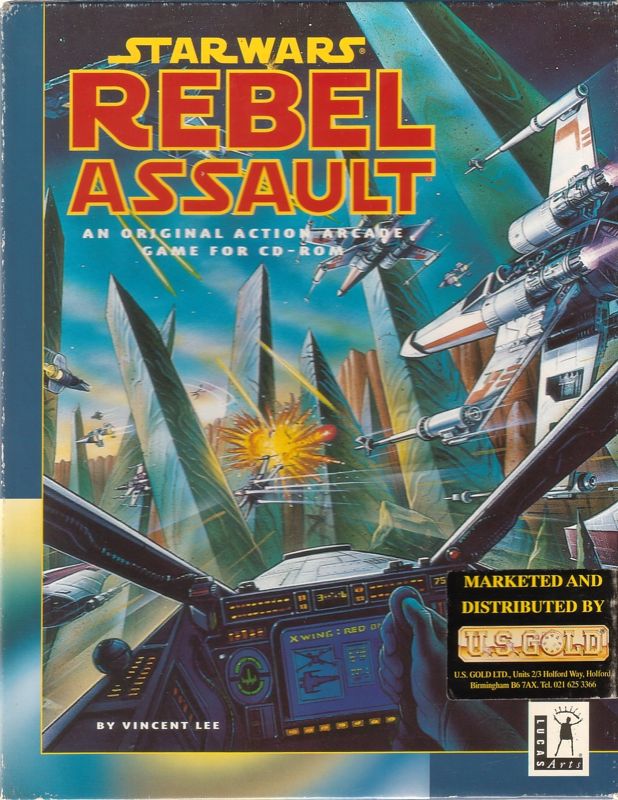 I have always had a soft spot for Star Wars: Rebel Assault, even though I would never try to argue that it is the best Star Wars game of the DOS era.
It is not X-Wing. It is not TIE Fighter. It is not Dark Forces. It does not have the tactical depth, freedom, or replay value of the strongest LucasArts PC games from the same period.
But it does represent something very specific and very important: the moment when Star Wars became part of the early multimedia PC sales pitch.
Rebel Assault was not just a game you played. It was a game you showed people. It was the kind of title that helped justify a CD-ROM drive, a sound card, speakers, and the idea that a home PC could suddenly deliver something closer to cinema. Not quite cinema, obviously. More like cinema squeezed through early-90s hardware and asked to behave.
That is why it is still interesting.
The CD-ROM Drive Needed a Reason to Exist
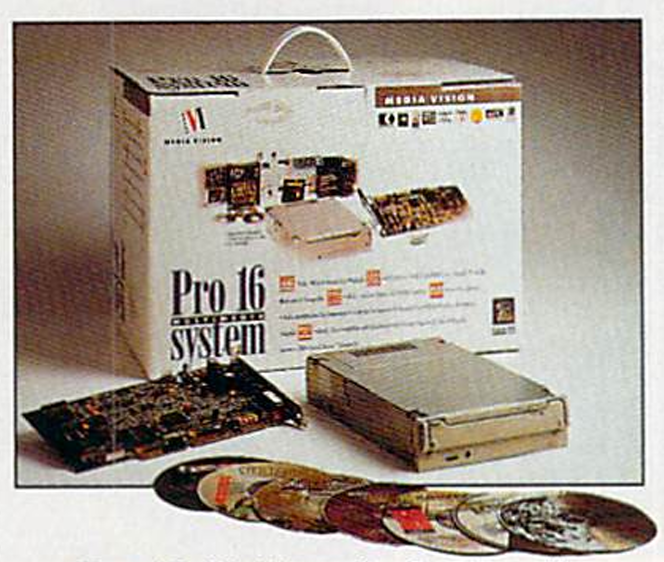 In 1993, a CD-ROM drive was not just another standard PC component. It was an upgrade, and upgrades needed a solid justification to purchase.
A floppy-based game could still do amazing things, but it had limits. Developers had to squeeze, compress, reuse, and imply. CD-ROM changed the scale overnight. Suddenly there was room for digitised speech, video sequences, large audio files, pre-rendered visuals, and presentation that felt much bigger than the typical floppy release.
LucasArts used their new game, Star Wars: Rebel Assault, and the popularity of Star Wars to sell that jump.
The game was not built around deep simulation. It was built around impact. Familiar ships, familiar sounds, familiar music, familiar movie-like moments, and a sense an affirmation that the PC had crossed into a new era. Looking back now, the limitations are obvious, but at the time the basic pitch was powerful: this is Star Wars coming out of your computer in a way that feels bigger than before.
That matters when looking at Star Wars: Rebel Assault as more than just a rail shooter. It belongs to that early CD-ROM period where storage capacity itself became part of the experience.
It Was Not Trying to Be X-Wing
The mistake is to judge Rebel Assault as if it was trying to be Star Wars: X-Wing.
X-Wing, released the same year, was a very different kind of Star Wars PC game. It was about cockpit discipline, mission briefings, energy management, targeting, shield control, wingmen, objectives, and the slow process of becoming less terrible at not dying in space.
Rebel Assault had another goal. It wanted to be fast, cinematic, and easy to understand. You were pushed through Star Wars scenes with limited freedom, shooting, dodging, memorising patterns, and trying to survive the next sequence.
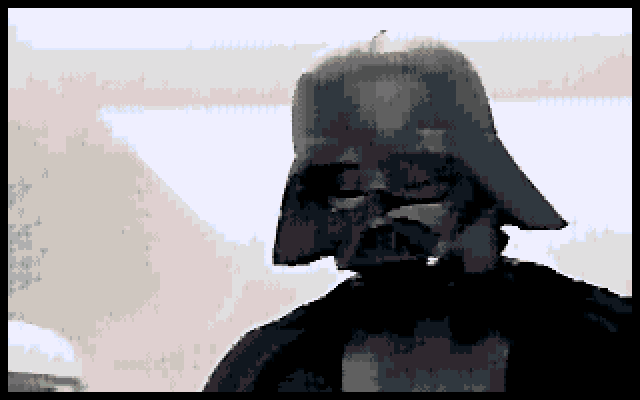
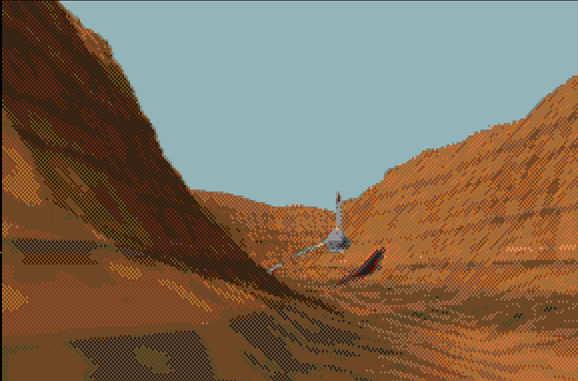
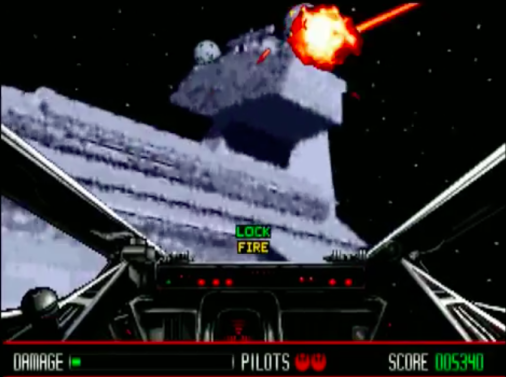
Actual footage from Rebel Assault
for DOS
That makes it weaker as a simulation, but stronger as a multimedia showcase.
It was the game you could show to someone who did not care about shield recharge rates or joystick precision. They could see the video, hear the speech, recognise the music, and immediately understand why a CD-ROM drive felt like a “must have” purchase – the future was here, now.
For serious PC players, that could also be frustrating. Rebel Assault gave you spectacle, but often took away control. It was impressive, then stiff, then impressive again.
Very 1993, in other words.
The Sound Side Is More Interesting Than It First Looks
The audio side of Rebel Assault is one of the most interesting parts of the story, especially because LucasArts had already done remarkable work with iMUSETM.
iMUSETM was one of those clever LucasArts ideas that made games feel more alive. Instead of music simply looping in the background like other games, it could react to what was happening in the game. A mission event, a danger cue, a change in pace, or a dramatic moment could shift the music in a way that felt natural. Perhaps they saw Chris Roberts’ Wing Commander game which used a similar mechanism? It arrived a year before the first game would use iMUSETM (Monkey Island 2: LeChuck’s Revenge).
That kind of adaptive music was a big part of why earlier LucasArts games felt so polished. In a game like X-Wing, music was not just decoration. It was part of the feedback loop, much like a movie.
The CD-ROM era complicated that.
 Recorded audio could sound fuller and cleaner than FM music or a basic MIDI setup. For anyone coming from a weaker sound card, CD audio and digitised sound could feel like a huge leap. But higher audio quality did not automatically mean a better experience. It wasn’t interactive. If the music became less responsive, something was lost.
That trade-off is easy to forget now.
Progress in PC sound was not a straight line from bad to good. OPL3 FM, Sound Blaster, Roland MT-32, General MIDI, CD audio and later streamed digital audio all had different strengths. Rebel Assault sits in the middle of that shift, where the industry was becoming fascinated by recorded presentation, sometimes at the cost of interactivity.
General MIDI Was Not the Star Here
One thing that stands out about Rebel Assault is the lack of General MIDI support.
For 1993, that is notable. The Roland SC-55 and other General MIDI devices were very much part of the high-end PC gaming conversation. A lot of DOS game players cared deeply about whether a game supported Ad Lib, Sound Blaster, MT-32, General MIDI, Gravis UltraSound or something more exotic.
But Rebel Assault was not really chasing that audience in the same way.
It was leaning into CD-ROM multimedia. The goal was not to show what a great MIDI module could do. The goal was to make the game feel like a Star Wars audio-visual event coming from the disc.
That choice makes sense, but it also helps explain why Rebel Assault feels different from other LucasArts PC games of the period. It is less about the traditional DOS soundcard arms race and more about the arrival of CD-based presentation.
That was exciting, but it came with a cost.
The PC gained storage, speech, video and recorded audio. It sometimes lost some of the clever responsiveness that had made earlier game audio feel so dynamic.
The Practical Side Was Part of the Experience
The thing I miss most about this era, while also absolutely not wanting to relive it every day, is how physical PC gaming felt.
You did not just click a library icon and wait for a launcher to update itself. You had drivers, memory settings, sound card configuration, CD-ROM drivers, MSCDEX, IRQs, DMAs, joystick calibration, and sometimes the creeping suspicion that your computer had developed a personal grudge.
That is part of Rebel Assault’s history too.
It was not only “a Star Wars game on CD.” It was a game tied to the practical reality of CD-ROM gaming on DOS machines. The disc mattered. The drive mattered. The sound setup mattered. The machine mattered.
Even today, working with CD-ROMs on retro hardware is its own little project. The guide to accessing CD-ROM images on a retro PC is exactly the kind of thing that reminds you how much of this history lives outside the game itself. Discs, images, drives, networking and storage are all part of keeping the experience alive.
That practical layer is one reason Rebel Assault remains more interesting on period hardware than it might seem from a modern distance. In DOSBox, it is a preserved old game. On a real or period-correct PC, it becomes part of the whole multimedia ritual again.
Dark Forces Shows Where Things Improved
Dark Forces is useful as a comparison because it shows how quickly LucasArts found a better balance between CD-ROM presentation and actual game design.
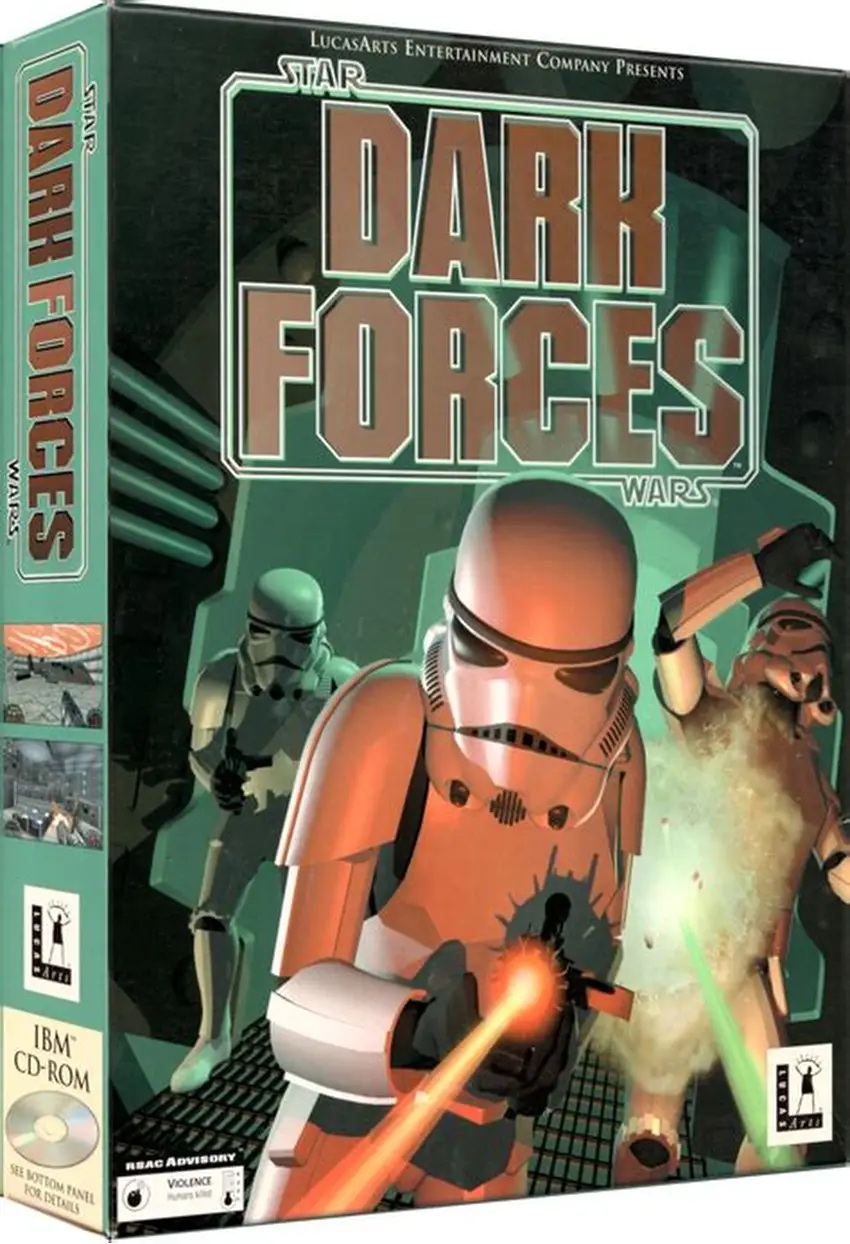
By 1995, the CD-ROM was still important, but it was not the whole personality of the game. Dark Forces had speech, music, cinematic material and CD-ROM storage, but it also had proper levels, exploration, movement, weapons, vertical spaces and a much stronger sense of player control.
Its 320 x 200 VGA presentation, CD-ROM release, DPMI requirements and broad sound card support make it a very different kind of DOS Star Wars game. It still belongs to the multimedia era, but it is less trapped by it.
The important difference is that Dark Forces used the technology to support the game. Rebel Assault often felt like the technology was the point of the game. That is not meant as an insult. It is just where Rebel Assault sits historically. It was a showcase first and a game second. Dark Forces was a game first.
That is why one is remembered as a major Star Wars classic and the other as a fascinating CD-ROM-era artifact.
Rebel Assault II Went Further Down the FMV Road
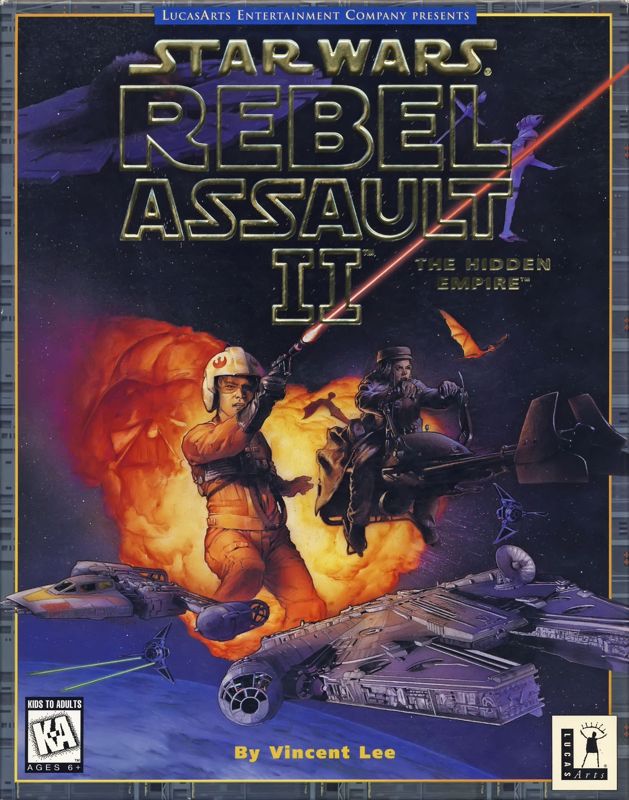 Rebel Assault II: The Hidden Empire pushed the cinematic idea even harder.
By then, Full Motion Video (FMV) was everywhere. Developers were still testing how much video could be added before the “game” part started to feel secondary. Rebel Assault II is historically interesting because it used original filmed Star Wars material, which was exciting at the time, but it also shows the same problem as the first game.
Video could create atmosphere. It could also reduce interaction.
That was the great temptation of the multimedia period. CD-ROM gave developers more space than ever before, and some of that space was used brilliantly and creatively. Some of it was filled with video because video looked expensive.
Rebel Assault and its sequel sit right in the middle of that experiment. They show both the promise and the weakness of early multimedia design.
Why Rebel Assault Still Deserves Attention
I do not return to Rebel Assault because it is the strongest Star Wars game. I return to it because it explains a moment.
It explains the early CD-ROM excitement. It explains why multimedia PCs felt new and expensive and slightly magical. It explains the trade-off between presentation and control. It explains why developers were so eager to make games look like films, even before the design language was ready for it.
It also helps tell the wider story of Star Wars on PC.
At Star Wars: Gaming, we keep a reference archive of All Star Wars games ever made, and Rebel Assault is exactly the kind of title that proves why that broader history matters. The story is not only made from the obvious masterpieces. It is also made from the showpieces, experiments, ports, awkward transitions and games that captured where the hardware was going before everyone had agreed what to do with it.
Rebel Assault is flawed, stiff and very much of its time, but that is also why it belongs on the shelf. Preferably near the other LucasArts boxes, and ideally not too far from a working CD-ROM drive.
Author Bio
Søren Ahrensborg Kamper runs Star Wars: Gaming, a long-running Star Wars gaming site covering classic LucasArts titles, DOS-era Star Wars releases, KOTOR, SWTOR, modern Star Wars games, mods, retro releases, and the strange corners of Star Wars gaming history that never really disappear.