Trident TVGA8800 Series
The TVGA 8800 series was the second Trident chipset, released in 1989 after their earlier TVGA8200LX from the year before.
|
Released | 1988 |
| Bus | ISA 8-bit or 16-bit | |
| Standards | MDA, Hercules, CGA, EGA, VGA, SVGA | |
| Memory | 256 KB or 512 KB (80ns - 100ns FPM DRAMs) |
|
| RAMDAC | External 256-colour (50 MHz) Typically Samsung KDA0476, Avasem AV3676, or UMC UM70C171. |
|
| See Also | Trident TVGA8900 Series |

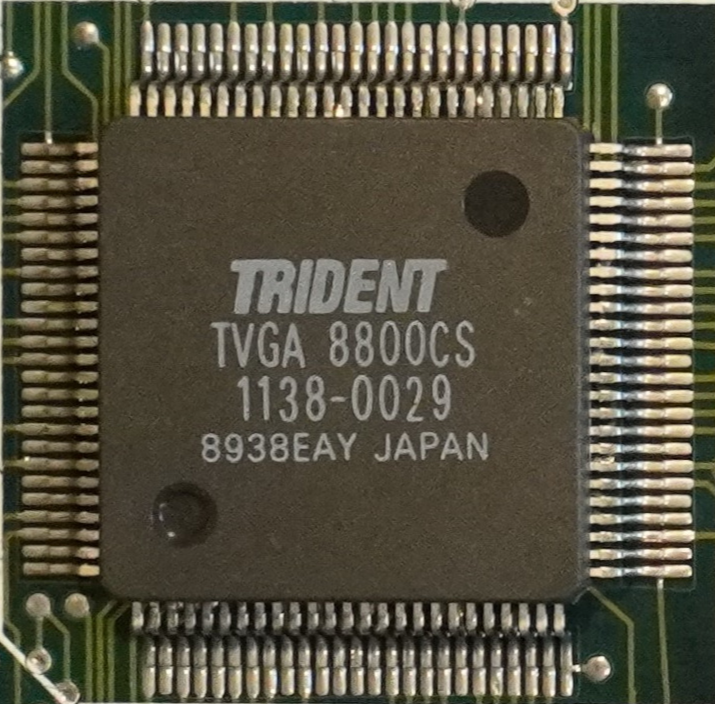
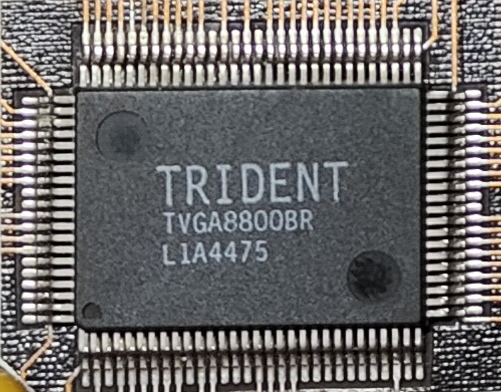
The Trident TVGA8800 series comprised the TVGA8800BR which arrived first, and TVGA8800CS which followed in 1989.
Similar to other SVGA cards at the time, some TVGA8800-based cards came with both a 15-pin DSUB for analogue VGA output and a 9-pin DSUB for digital output if the card was running in emulation mode for MDA, Hercules, CGA or EGA.
The 8800BR only supported memory banks of 128 KB. The 8800CS supported 256 KB banks.
With a maximum of 512 KB of video memory, these chipsets can support up to 1024 x 768 or 800 x 600 (both in 16 colours), or 640 x 480 in 256 colours. According to an article on ibiblio.org, "The Trident 8800 chips have a problem with 256 color modes, as they always double the pixels output in 256 color mode. Thus a 640x400 256 color mode (5Ch) actually uses a 1280x400 frame, requiring at least a multi sync monitor. This problem is fixed on the 8900."
The TVGA8800CS was used in a partnership with ZyMOS Corporation (renamed to Appian Technology in 1990). ZyMOS had already created a clone PC/AT chipset called POACH 1 ("PC-On-A-CHip"), and were expanding into VGA chipsets. They took the TVGA880CS and enhanced it with new graphics modes, calling their version the POACH 51 (or POACH 51 AA).
The TVGA 8800 series supported the following text and graphics modes:
| Mode # | Text/Graphics | Resolution | Colours | Text Block/Type | Notes |
|---|---|---|---|---|---|
| 50h | Text | 80 x 30 | 16 | (8x16) | |
| 51h | Text | 80 x 43 | 16 | (8x11) | |
| 52h | Text | 80 x 60 | 16 | (8x8) | |
| 53h | Text | 132 x 25 | 16 | (8x14) | |
| 54h | Text | 132 x 30 | 16 | (8x16) | |
| 55h | Text | 132 x 43 | 16 | (8x11) | |
| 56h | Text | 132 x 60 | 16 | (8x8) | |
| 57h | Text | 132 x 25 | 16 | (9x14) | |
| 58h | Text | 132 x 30 | 16 | (9x16) | |
| 59h | Text | 132 x 43 | 16 | (9x11) | |
| 5Ah | Text | 132 x 60 | 16 | (9x8) | |
| 5Bh | Graphics | 800 x 600 | 16 | Planar | |
| 5Ch | Graphics | 640 x 400 | 256 | Packed | |
| 5Dh | Graphics | 640 x 480 | 256 | Packed | Requires 512 KB |
| 5Eh* | Graphics | 800 x 600 | 256 | Packed | Undocumented mode |
| 5Fh | Graphics | 1024 x 768 | 16 | Planar | Requires 512 KB |
| 60h | Graphics | 960 x 720 | 16 | Planar | Zymos POACH 51 only |
| 61h | Graphics | 768 x 1024 | 16 | Planar | Requires 512 KB. On Zymos POACH 51, this is 1280 x 640 x 16 |
| 62h | Graphics | 512 x 512 | 256 | Packed | Zymos POACH 51 only |
| 63h | Graphics | 720 x 540 | 16 | Planar | Zymos POACH 51 only |
| 64h | Graphics | 720 x 540 | 256 | Packed | Zymos POACH 51 only |
| 6Ah | Graphics | 800 x 600 | 16 | Planar | Zymos POACH 51 only |
*This graphics mode is undocumented on the TVGA8800.
The TVGA8800BR can be found on the following graphics cards:
- Suntra TVGA - 8-bit ISA or 16-bit ISA with 256 KB video memory (FCC ID: HNG2YPTVGA16X159A)
- VGA Enhancer V8-512K - 16-bit ISA with 256 KB upgradable to 512 KB. Suntac GST GS0276P-65 RAMDAC
The TVGA8800CS can be found on these graphics cards:
- Trident Microsystems Able VGA IV (FCC ID: HNG2YPTVGA16, HNG2YPTVGA16X15A0, HNG2YPTVGA16X159A)
Variants
The TVGA8800 came in two model variants:
- TVGA8800BR - Supported only 128 KB memory banks. Packaged in a 100-pin rectangular PLCC (30/20/30/20).
- TVGA8800CS - Supported 64 KB and 128 KB banks, old/new mode support (new mode control includes timing info). Packaged in a 100-pin square PLCC (25/25/25/25).
On the TVGA8800CS, Trident VGA cards can operate in two modes: "Old Mode" (the 8800BR), with a 128 KB window to display memory at A000h - BFFFh and "New Mode", with a 64 KB window to display memory at A000h - AFFFh. Old/New mode is selected by reading/writing the Chip Version Register (3C4h index 0Bh). Each mode has its own registers at 3C4h index 0Dh and 0Eh.
Competition
In 1988 when the Trident TVGA8800BR chipset launched, the VGA graphics market was awash with competition. Probably their main competition on the VGA chipset side this year was from the Tseng Labs ET3000 (used on cards such as Genoa Super VGA / Super VGA HiRes), Paradise PVGA1A (which supported up to 1 MB of video memory). and Cirrus Logic CL-GD410/420. Headland/G2 also had their HT205/GC205, while Video Seven were still making their own proprietary ones like the 456-0023 on the VEGA VGA-16 and Fastwrite VGA.
The big graphics card manufacturers were Paradise (PVGA1A), Genoa (Super VGA and Super VGA Hi-Res), ATI (VGA Wonder and VGA Wonder 16), Video Seven (VRAM VGA), Everex (Viewpoint), and Orchid Technology.
Typical RAMDAC pairings included the Inmos IMSG176P (or AMD's equivalent AMD Am81C176), Brooktree Bt471KP, and Avasem V3676, so the maximum palette size was still 256,000 colours and RAMDACs maxed out at about 45 MHz.
In 1989 when the TVGA8800CS variant arrived, Orchid introduced their ProDesigner VGA (ET3000), Video Seven launched their VGA 1024i (running the new Headland HT208/GC208 chipset), and Paradise came out with the PVGA1B and PVGA1C chipsets which were able to support 1024 x 768 resolutions in 16 colours or 800 x 600 in 256 colours. RAMDAC-wise, we got the Brooktree Bt476KP and the soon-to-be popular Music Semiconductor TR9C1710 RAMDAC which ran at 50 MHz.
In the Media
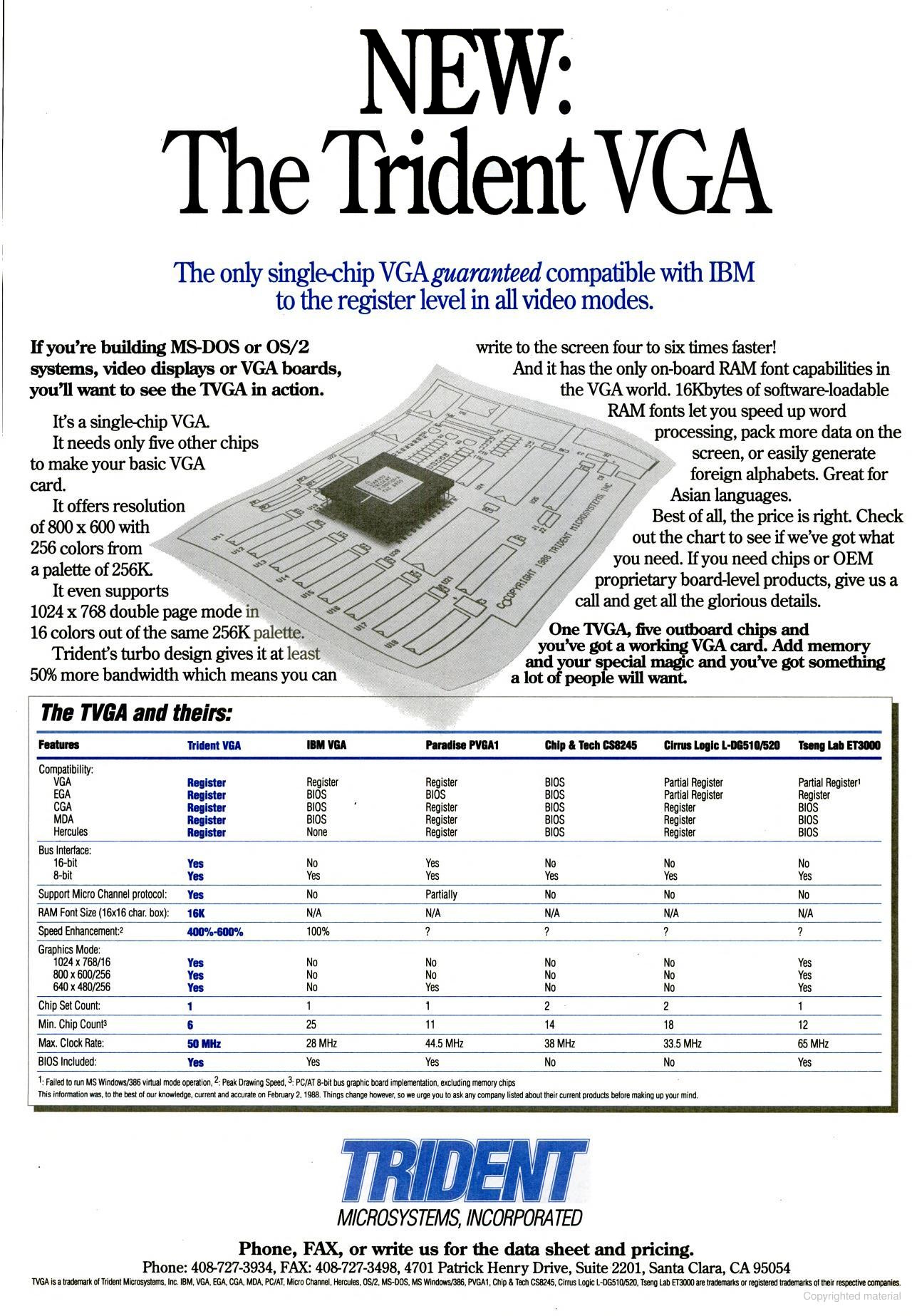
An advertisement for the TVGA8800 chipset (March 1988)
Setting it Up
Some TVGA8800-based cards have a DIP switch block with six switches on the backplate. These are used to set the monitor type that is connected to the card, the data path width, and slow/fast address decoding.
| SW1 | SW2 | SW3 | SW4 | |
| VGA mode* | On | On | On | On |
| EGA mode | Off | On | On | On |
| CGA mode | On | Off | On | On |
| MDA/Hercules mode | Off | Off | On | On |
* = factory default setting
SW5 sets either slow or fast address decode. If you have a high-speed motherboard bus and have problems booting, set this to OFF. The default is ON.
SW6 sets either 8-bit or 16-bit data path. If your card has problems running in a 16-bit ISA slot, set this to OFF for 8-bit.
Some cards like the Trident Able VGA IV also have some jumpers to further configure the card.
| Jumper | Meaning | Settings |
|---|---|---|
| J1 | Monitor Type | 2-3 = VGA or EGA monitor* 1-2 = CGA or MDA monitor |
| J2 | 8-bit BIOS reads | 2-3 = Autodetect* 1-2 = Autodetect (Compaq/Micronics) Unjumpered = 8-bit BIOS reads |
| J3 | IRQ9 Enable/Disable | Unjumpered* = Disabled Jumpered = Enabled |
J2 can be set to tell the card to use only 8-bit reads for BIOS calls - do this if you have problems booting the machine when the card is installed in a 16-bit ISA slot.
J3's IRQ9 setting is seen on several older graphics cards, and uses IRQ9 (if enabled) to tell the system when the vertical retrace has completed each pass. Search for IRQ9 using the 'Search' box at the very top of the page if you want to know more about this, and which other cards had this option.
Some cards came with a VGA feature connector at the top, either as an edge connector or a 26-pin header - this was rarely used but can provide access to the display output of the TVGA8800 for any connectable peripherals.
Downloads
Note that drivers and utilities for the TVGA8900-series will not work on the TVGA8800-series.
User Manual User manual for the Trident Able VGA IV Card |
DOS Utility Disk
Disk Images of the DOS driver disk s for Trident Able VGA IV card. Includes mode setting utility SVM.EXE and drivers for numerous DOS applications. |
TVGA8800CS ROM BIOS A 32 KB ROM BIOS dump |
Zymos Poach 51AA ROM BIOS A 32 KB ROM BIOS dump |
TVGA8800CS ROM BIOS A 32 KB ROM BIOS dump |




More Pictures
Most TVGA8800-based cards follow the same reference design / layout provided by Trident Microsystems.
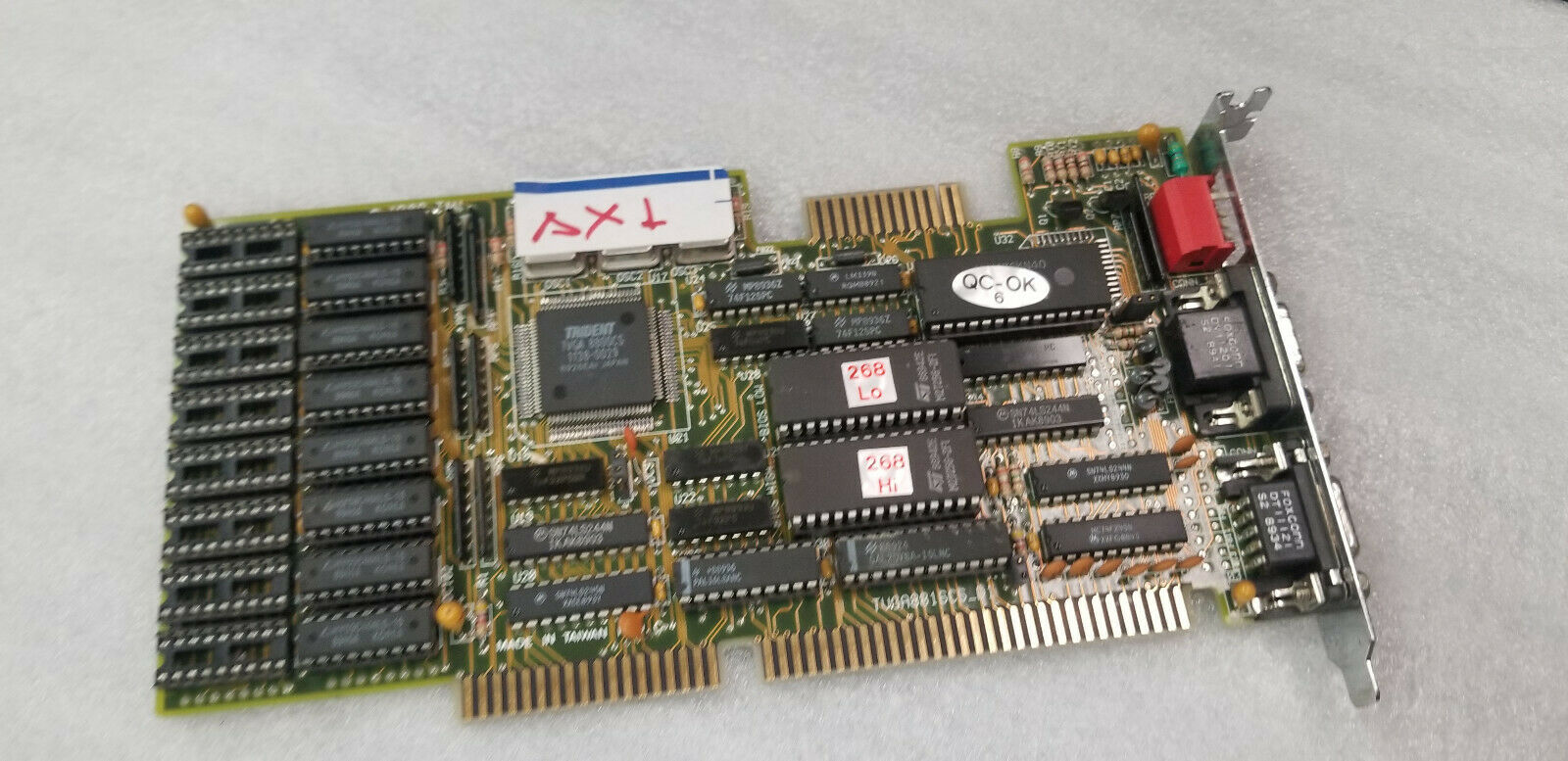
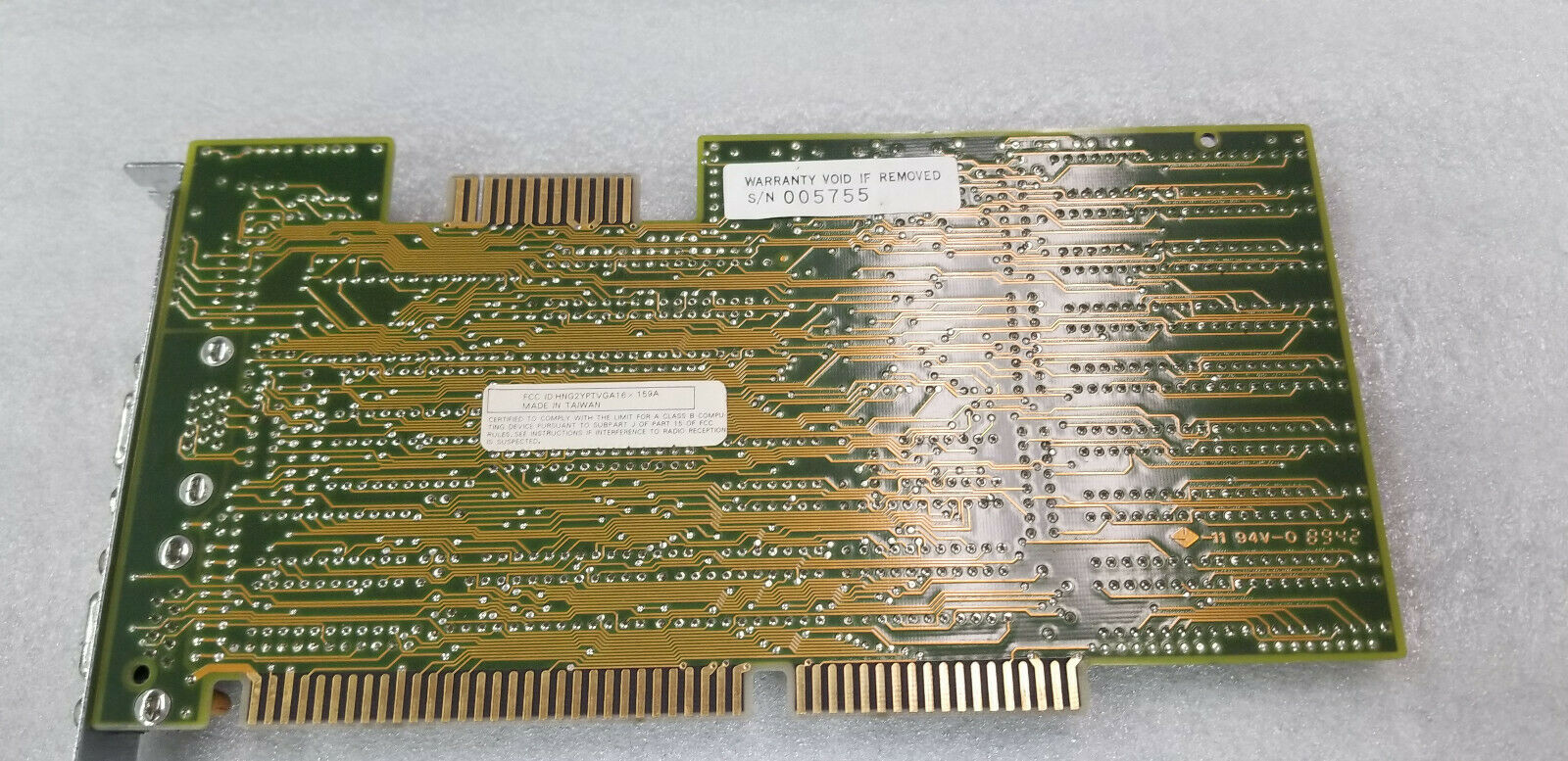
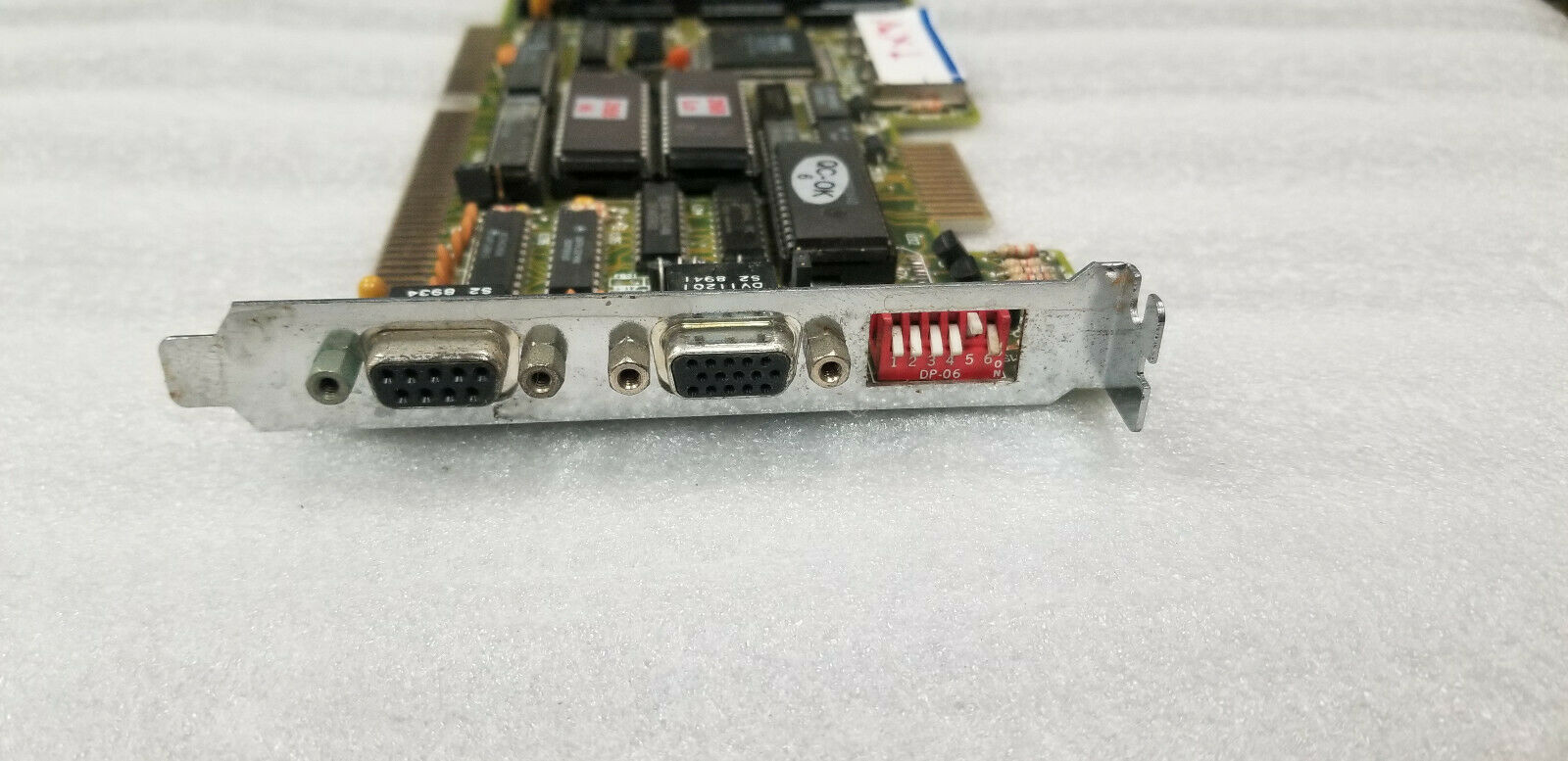
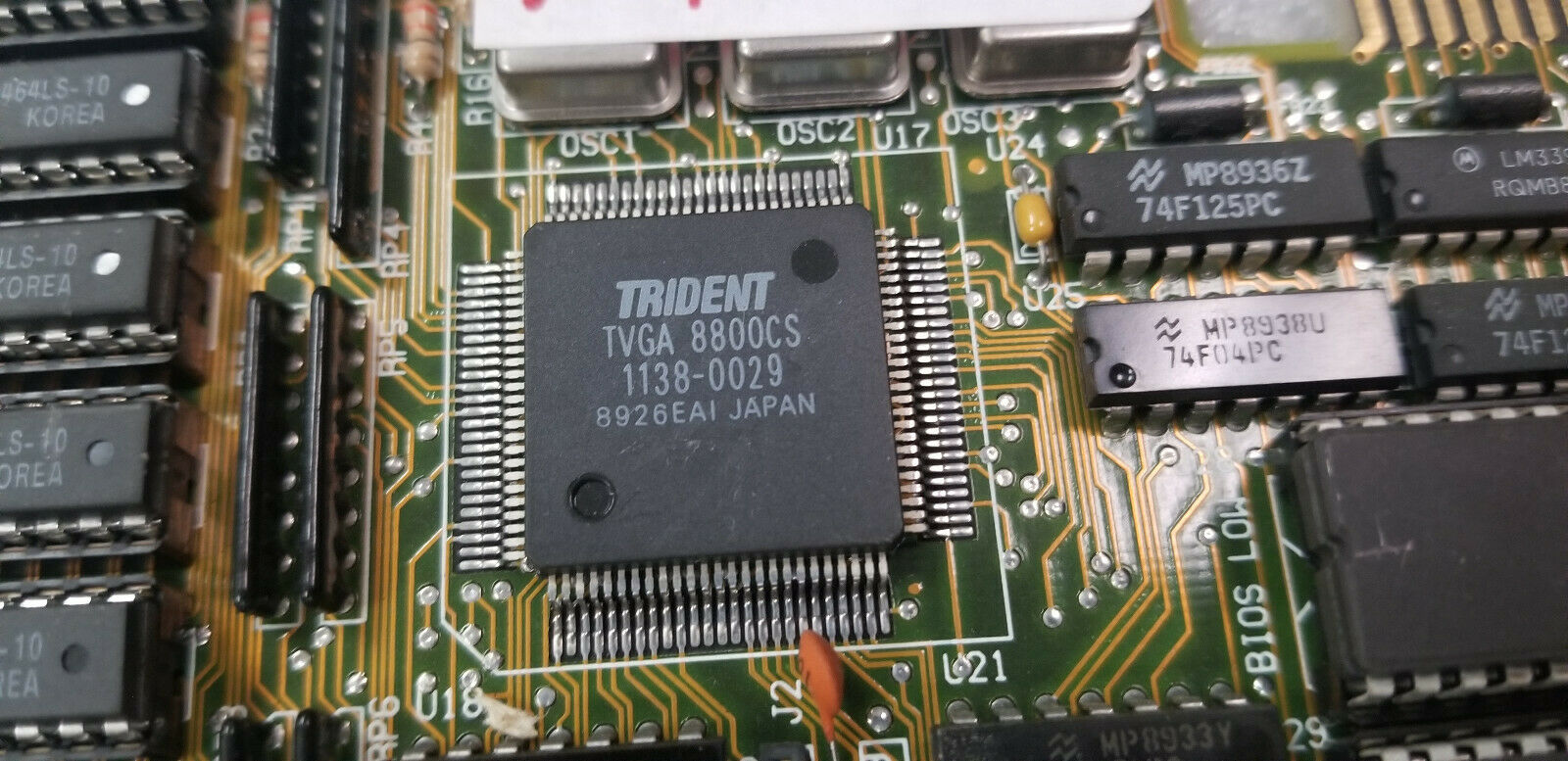
A Trident TVGA8816CS
card with TVGA 8800CS chipset and 256 KB memory (FCC ID: HNG2YPTVGA16X159A)
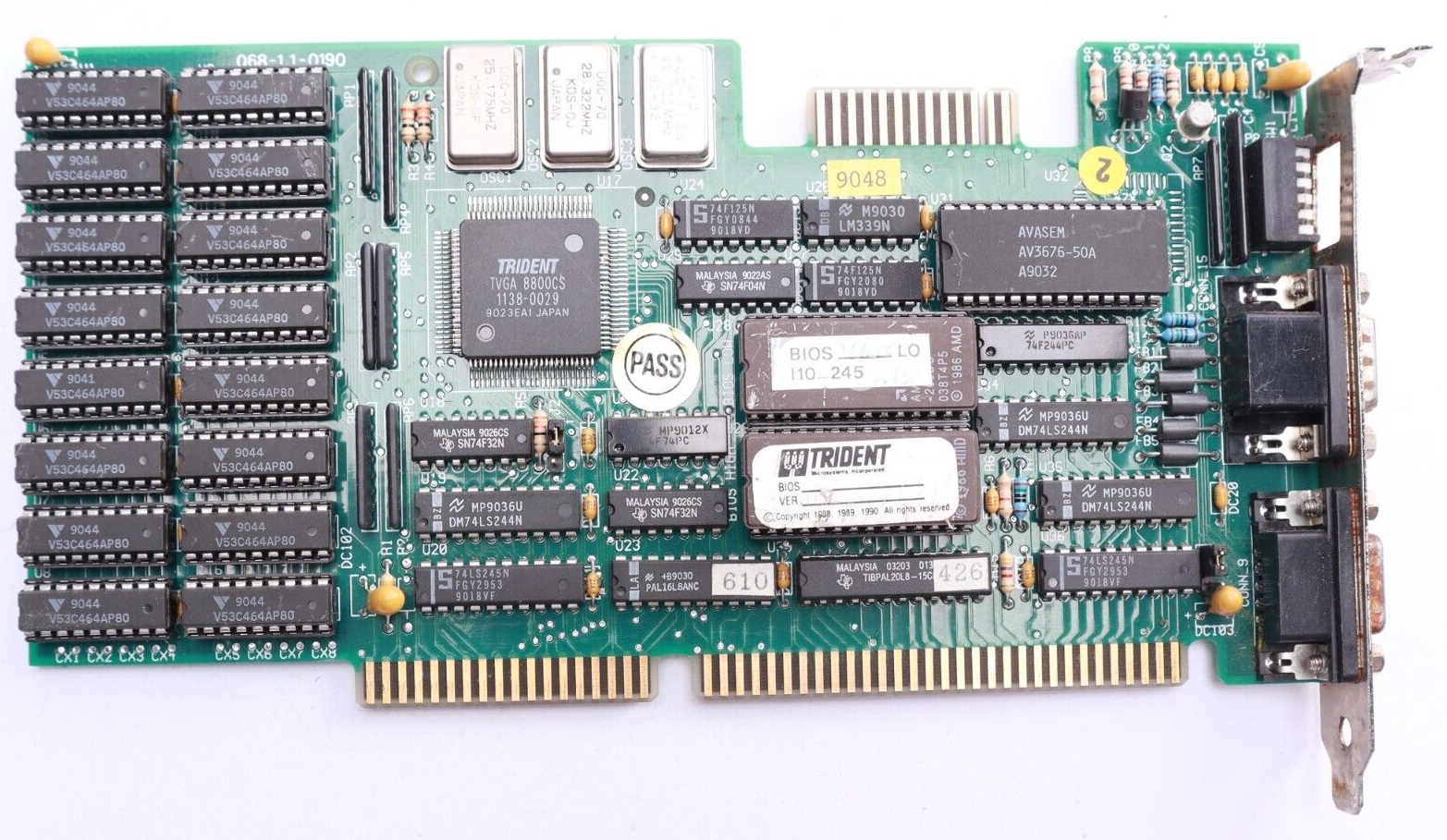
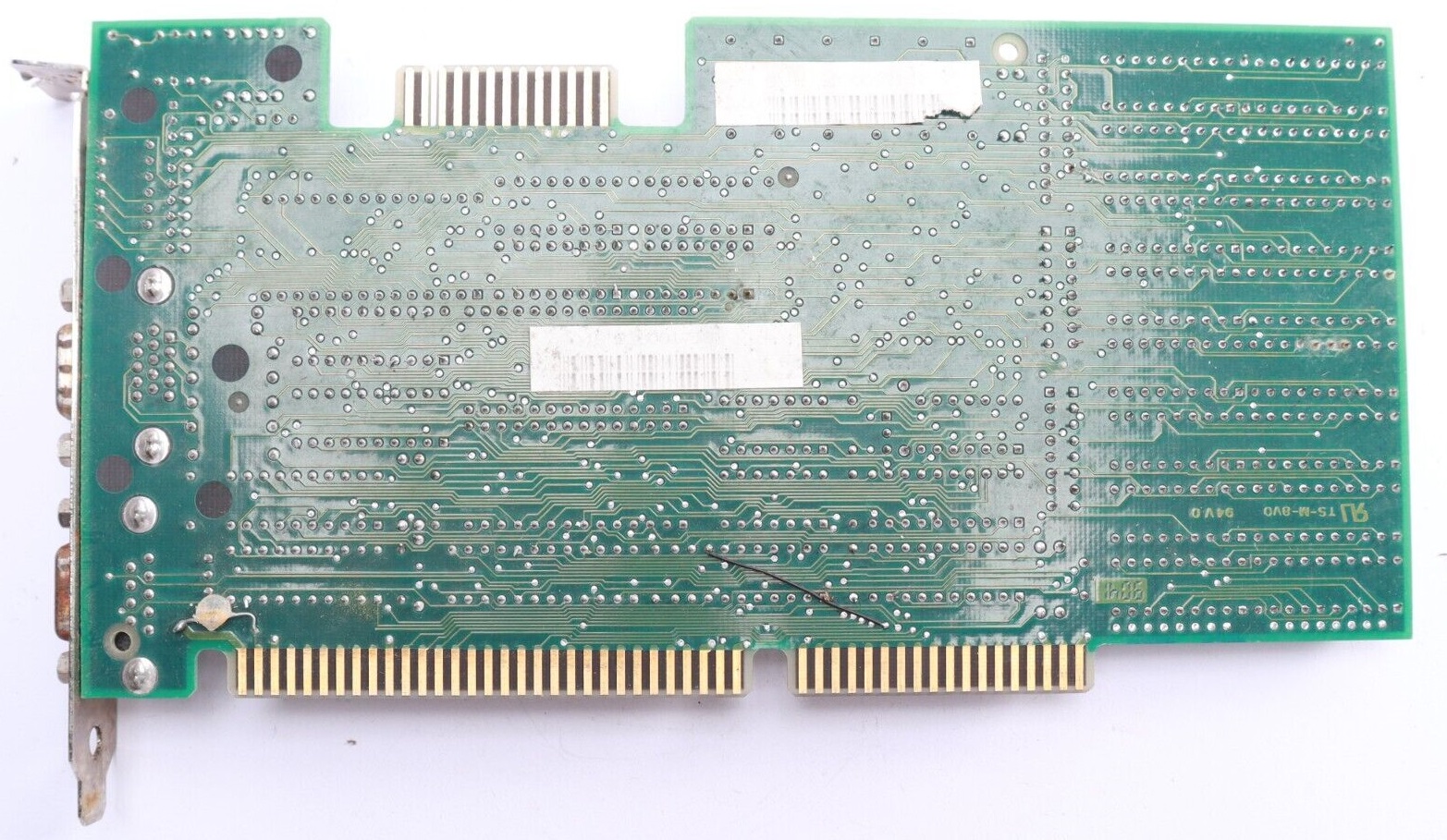
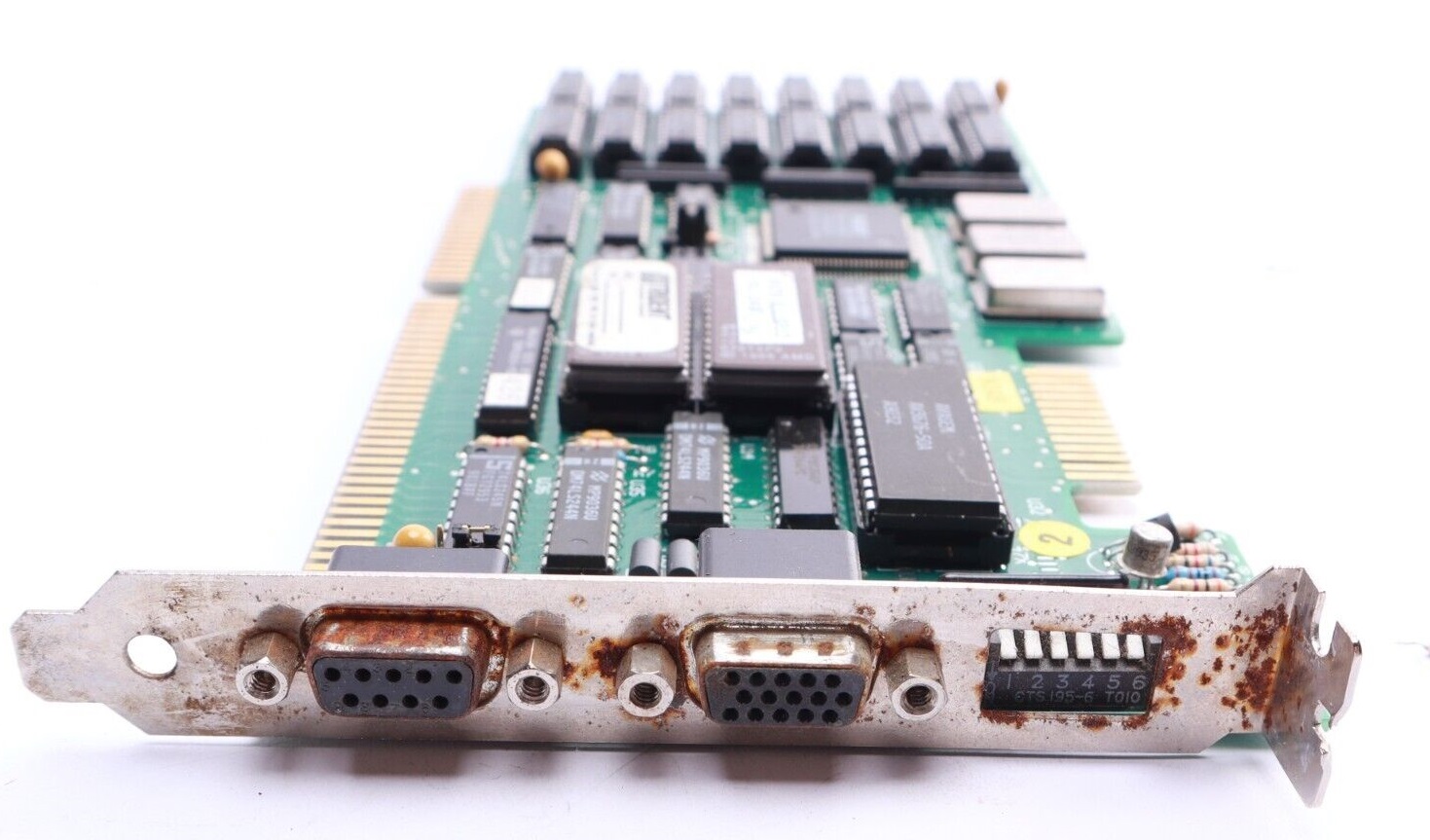
A 512 KB TVGA880CS-based card with part #068-1 1-0190 (no FCC ID)
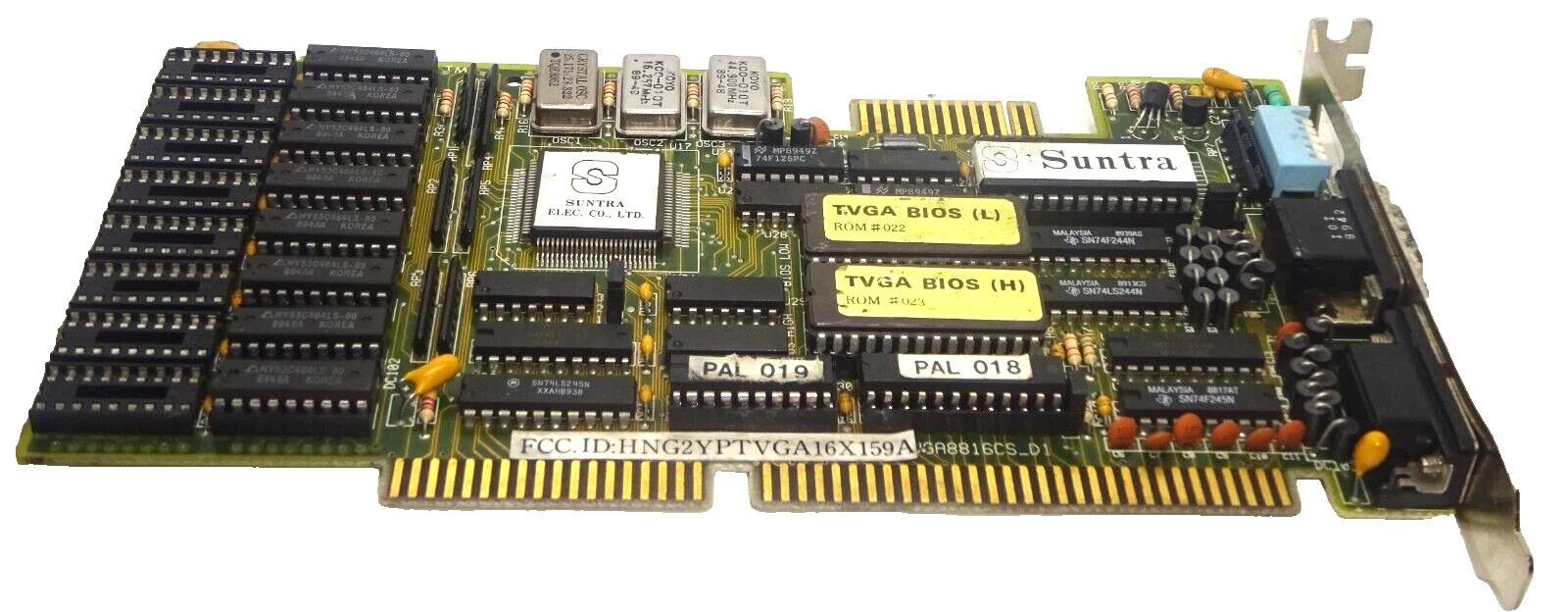
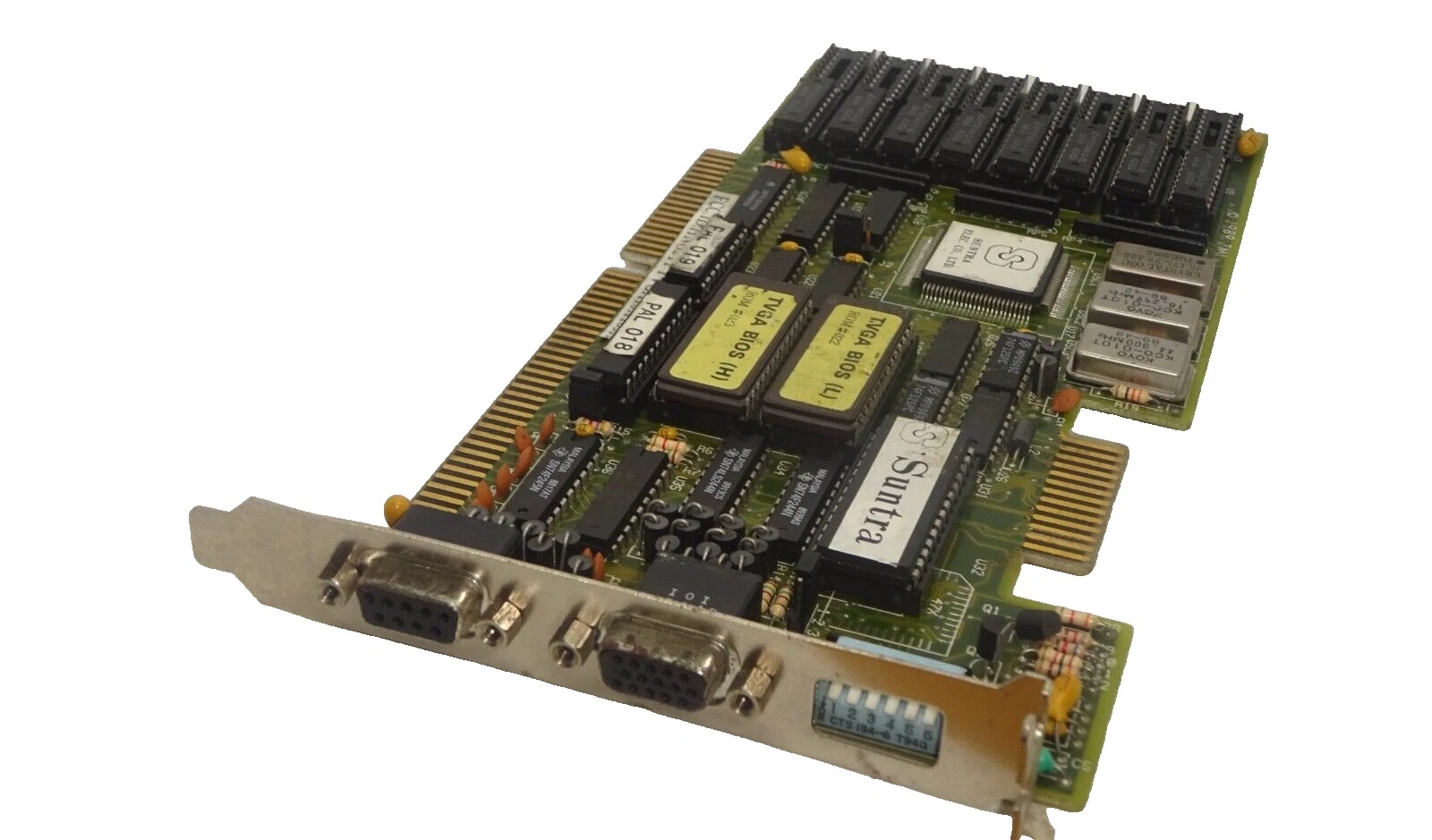
Suntra TVGA card
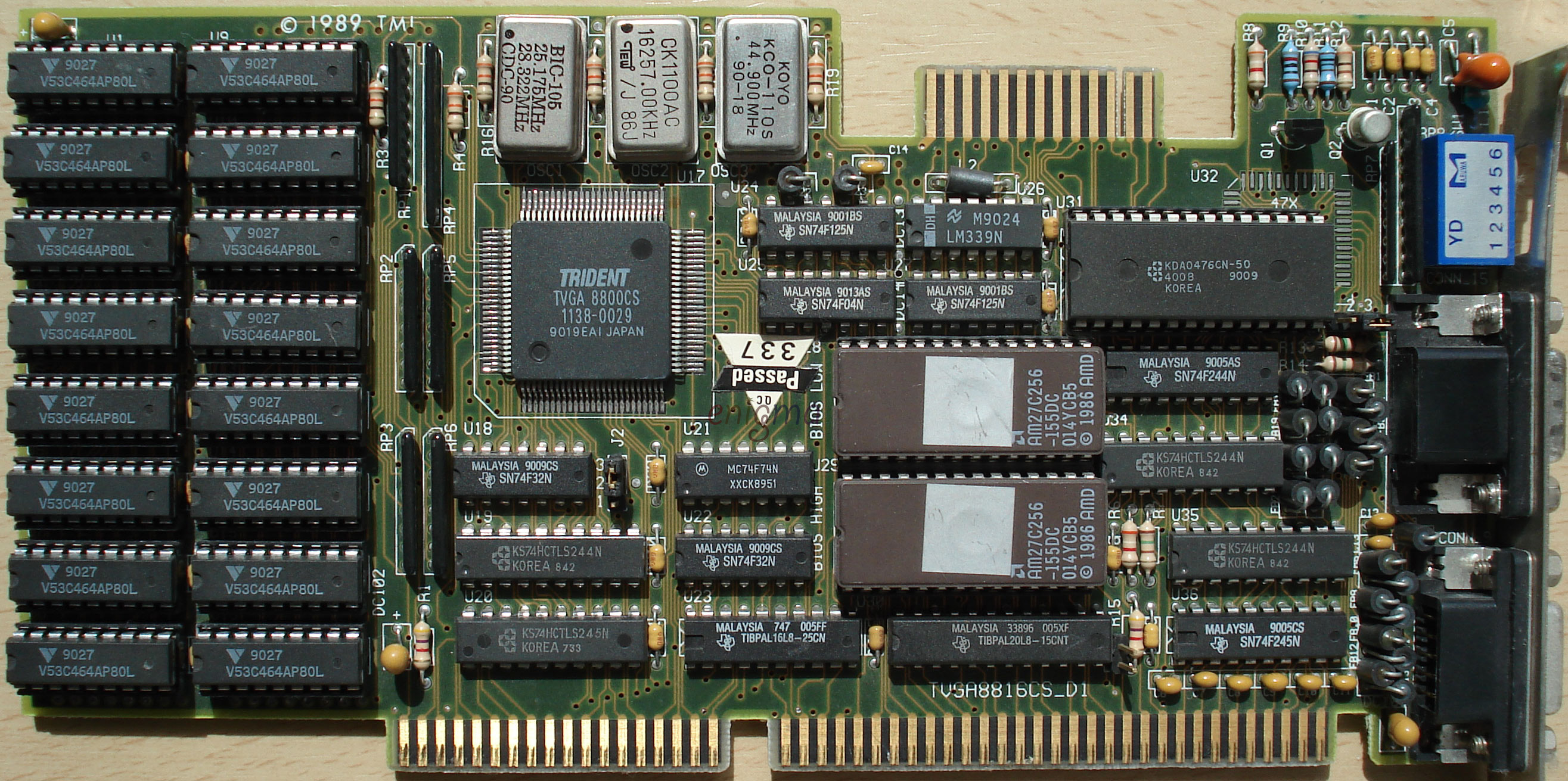
A Trident TVGA8816CS
card with TVGA 8800CS chipset and 512 KB memory
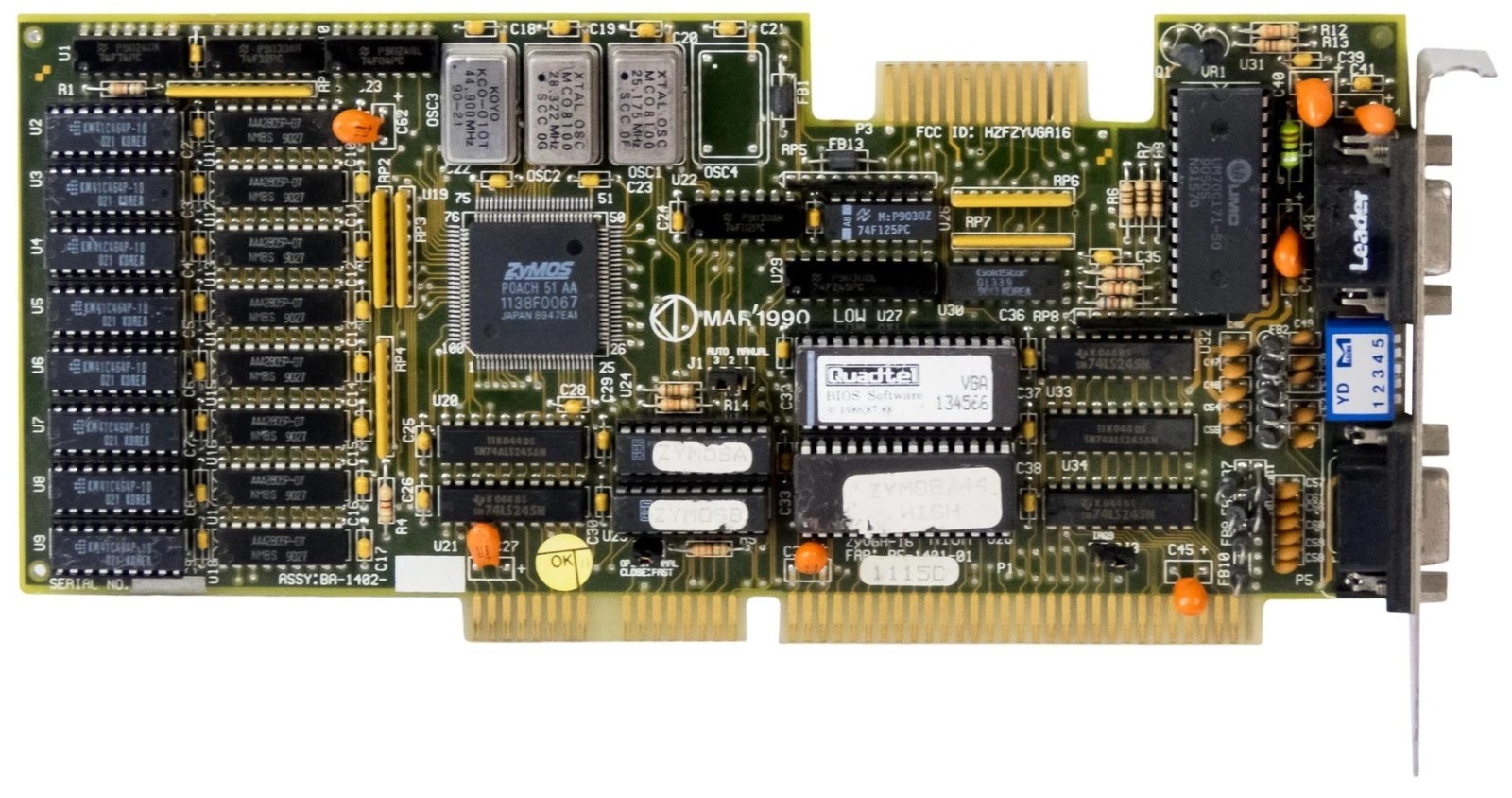
Appian Graphics ZYVGA-16 card using their own Zymos POACH 51 AA (FCC ID: HZFZYVGA16)