Peter Norton Computing / Symantec
Peter Norton Computing was Peter Norton's own company that he started in 1985. His first product, The Norton Utilities, became ubiquitous during the DOS era. Offering power that simply didn't come with the standard DOS commands, these provided undelete, file find, wipedisk and wipefile commands to name but a few - they were considered essential both for security and convenience.
Symantec had started out even earlier, in 1982, in the field of artificial intelligence. Through a series of acqusitions and mergers, Symantec released their first product in 1985: a database management system called Q&A. It was unique in that it used a natural-language query based on a 600-word dictionary. This allowed users to request data by typing in English sentences, hence the product name, Q&A.
Despite its modest success at selling Q&A, Symantec had difficulty in gaining market share over other database companies such as Ashton Tate with their dBase product and even from Lotus, with their spreadsheet with data capabilities, Lotus 1-2-3. They made just $8m in their first two years of sales - far short of expectations - though it would go on to be a big seller for them! The board soon realised they could not be a single-product company like WordPerfect or Ashton-Tate.
This led Symantec to enter into a period of acquiring other software companies in 1987 that had niche products outside of their database specialty. As part of these acquisitions, it was important they not only gained the products, but also the development staff.
In 1987, they released a word processor, Q&A Write. Similar to WordPerfect, typical operations are accessed via the function keys in combination with Shift, Ctrl and Alt. It was designed to be fun and easy to use. There were numerous features not found in bigger word processing packages at the time, including the ability to perform mathematical functions directly in the document, extract data from a Lotus 1-2-3 .WK1 file and incorporate it into your document, built-in spell checker, and box drawing. It sold for $199.
Peter Norton Computing was bought by Symantec in August 1990, but they retained the famous "Norton" branding across numerous product lines well into the 2000s. At the time of the acquisition, the DOS utilities market was estimated to be worth $410m, of which Peter Norton Computing had about a 34% share. The acquired company became a division of Symantec and was renamed Peter Norton Computing Group. Most of Peter Norton Computing's 115 employees were retained. The merger also helped Norton Computing regain the market share it was losing to competitors, especially Central Point Software.
Around 1994, Symantec acquired its two main competitors in the DOS utilities market, Central Point Software and Fifth Generation Systems. By this time, DOS 6.2 had launched and it included a lot of what these third-party utility suites offered, including anti-virus tools, disk defragmenters, backup, file fixing, file recovery, and more. This meant the DOS utility market was shrinking. It wasn't until Windows 95's release in August 1995 that this market took a new turn. Windows 95 came out of the box with a number of built-in capabilities so users no longer had such a dependence on third-party tools. Having said that, it also had some glaring omissions which opened up the third-party utility market to fill those gaps: the anti-virus built-into Windows 95 could block unknown programs writing to the hard disk but wasn't a comprehensive anti-virus tool, the backup capabilities were there but only rudimentary, and there was room for improvement in Windows 95's desktop. New 'Desktop Managers' arose to replace shell utilities, including Norton Navigator which replaced their older product The Norton Desktop for Windows.
Norton Utilities
As mentioned, The Norton Utilities was first released in 1985. Offering a suite of DOS utilities that either didn't come with any version of DOS, or bettered the functionality they provided. In its earlier versions (4.0 and below), the main reason to buy Norton Utilities was its potentially life-saving UnErase tool.
Norton Utilities 3.0 was released in 1985, and was the first version to include UnErase - a powerful file recovery tool. It retailed for $99.95 or $25 for users upgrading from an older version.
In 1987, Norton Utilities 4.0 arrived in both a 'standard' and Advanced Edition. The standard edition sold for the usual $99.95 with the Advanced Edition retailing for $150. In both versions, the suite of utilities were now linked by a menu-driven front end called The Norton Integrator. This listed all the utilities on one side of the screen, and selecting one would bring up all the options available on the right side. Both versions include a byte-level editor, though in the standard edition this is limited to disk data areas. In the Advanced Edition you could also view and edit everything on the drive, from the boot sector through to the last sector, including directories, the FAT and disk partition table. New in NY4 was a new batch command, ASK, which prompts the user for text input, allowing your batch files to be interactive, and Norton Change Directory which takes you instantly to any directory on your drive simply by typing any part of its name. Also new was File Info which allowed you to specify a 65-character description to each directory entry.
The Advanced Edition added Speed Disk (a disk defragmenter), and an UnFormat utility.
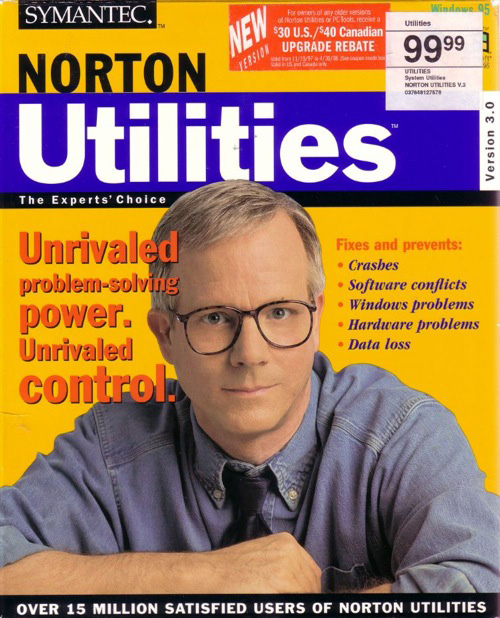
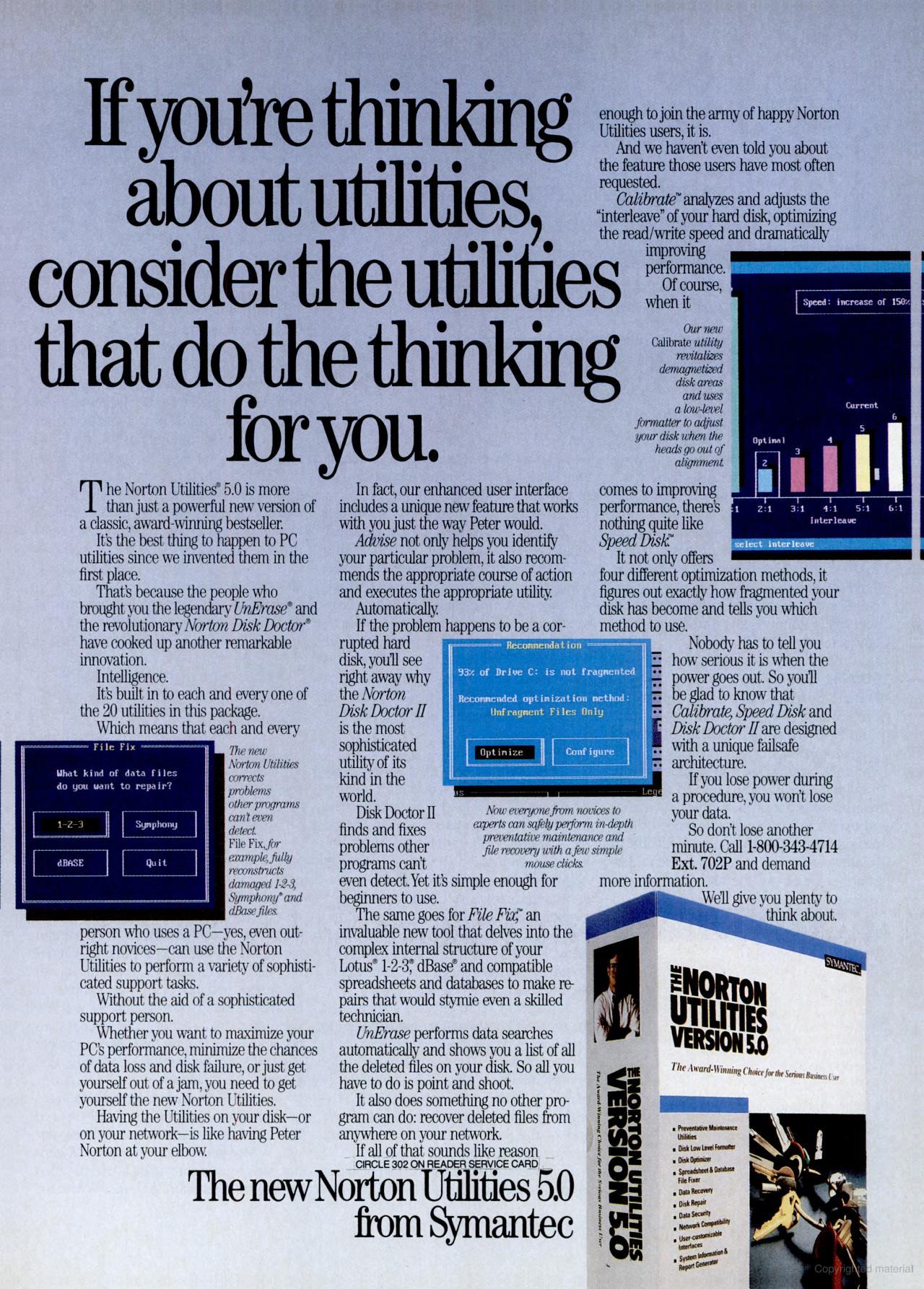
Norton Utilities 5.0 arrived in 1990 - it was the first version to be branded with the Symantec logo after their acquisition of Peter Norton Computing earlier that year. New to this version was Advise, a tool that identifies problems and recommends a course of action - including running the right utility to resolve it. Also in NU5 was the new Norton Disk Doctor II, able to find and fix problems other programs couldn't even detect, and File Fix, a tool to find and repair problems inside Lotus 1-2-3, dBase and compatible spreadsheets and databases. The new Speed Disk defragments your hard disk through four different optimization methods. Calibrate, the hard disk automatic interleaving adjuster, Disk Doctor II, File Fix and Speed Disk all had failsafe architecture to ensure no data loss if power went out during any of their operations.
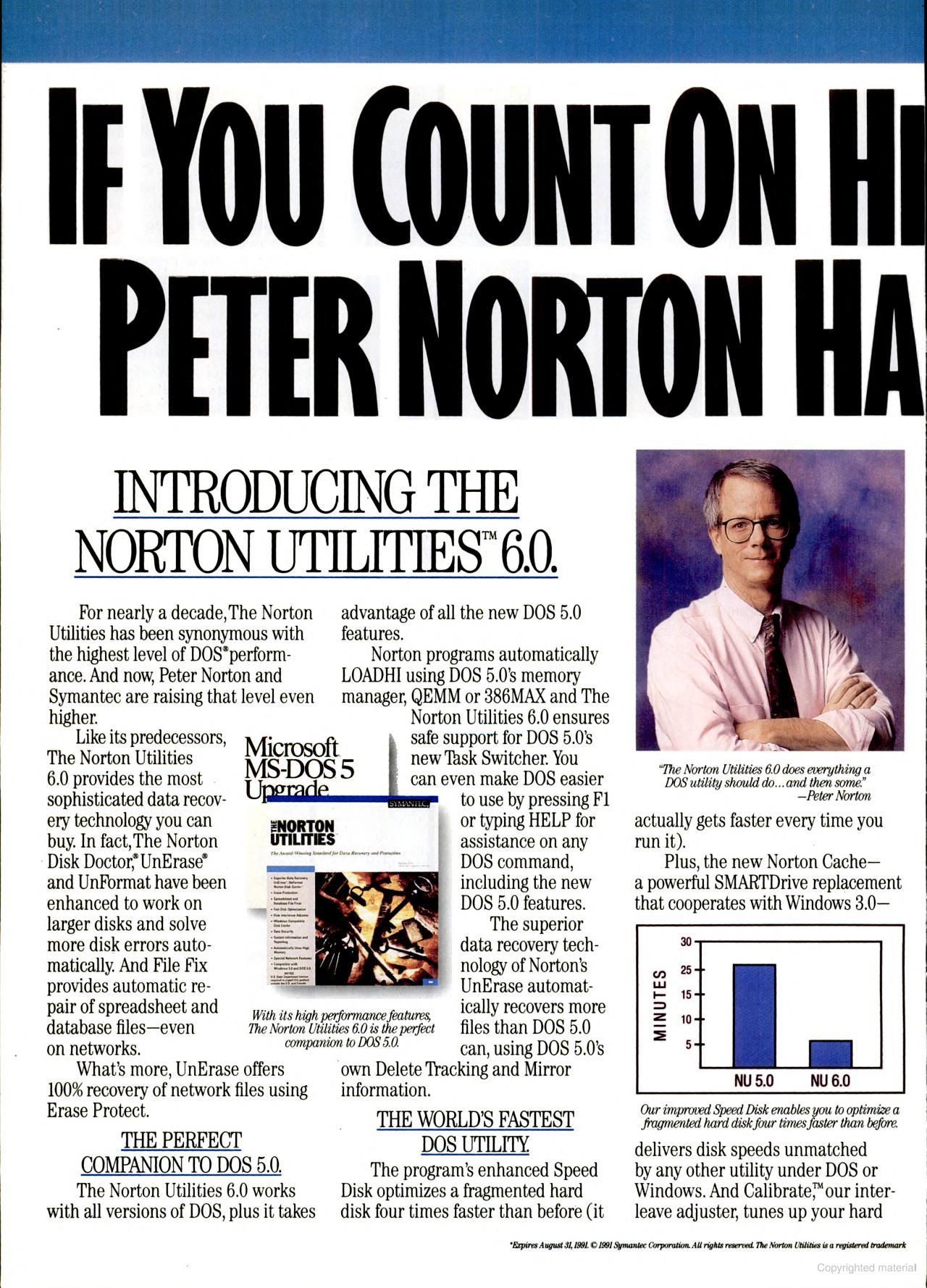
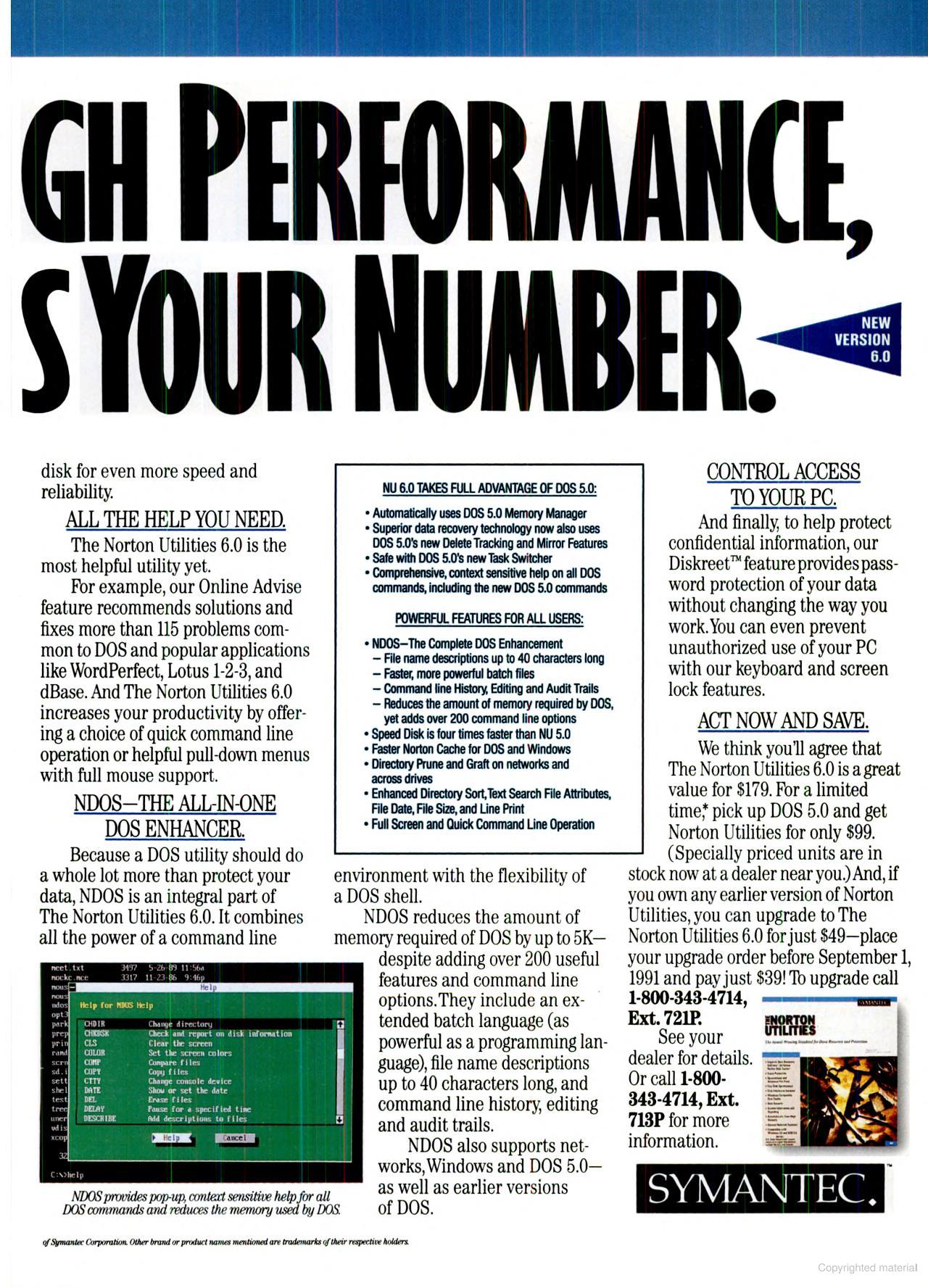
Symantec's Norton Utilities 6.0 was launched in 1991 at a price of $179 or $49 for upgrading users. It was designed to work with the new DOS 5.0 features, such as loading into high memory and works with DOS' new Task Switcher. Complete with enhanced versions of The Norton Disk Doctor, Unerase and UnFormat to work with larger disks and solve more disk errors automatically. NU6 also came with File Fix which provided repairs to spreadsheet and database files, even on a network. Also improved was Speed Disk, defragmenting your hard disk four times faster than before. New to the Norton Utilities was The Norton Cache - a powerful SmartDrive replacement that cooperates with Windows 3.0 - and Calibrate, a hard disk interleave adjuster. With the included NDOS, online help on any DOS command was available at the push of a button with pull-down menu options with mouse support. Included with NDOS was the ability to have 40-character file descriptions, more powerful batch commands, command-line history, editing and audit trails, and all using less memory than DOS would. In all, NDOS (included in NU6) added 200 useful features.
Norton Utilities 7.0 [for Windows] arrived in 1993. Now designed to work with hard disks that used DoubleSpace, SuperStor or Stacker, it came with a suite of data recovery tools including Disk Editor, The Norton Disk Doctor, and UnErase. Disk Editor could restore files that weren't even visible by DOS 6.0, The Norton Disk Doctor could automate more kinds of disk repair than any other utility on the market at the time. Unerase could be used to rebuild files that DOS 6's Undelete couldn't even recognise. Norton Utilities 7.0 also came with Speedisk that was able to defragment DoubleSpace drives, The Norton Cache, was their equivalent to DOS 6's SmartDrive, but was smaller and faster. In the package it also came with an emergency disk to allow you to boot into and recover a system that wouldn't boot itself.
See my "Let's Explore: Norton Utilities v7.00" feature article for more info!
With the launch of Windows 95 Preview product, Symantec released The Norton Utilities Preview Edition for $30. This included a pre-installation tune-up tool, Norton System Doctor which continually monitored all vital resources and data integrity, 32-bit versions of The Norton Disk Doctor and Speed Disk, UnErase capability, System Information and a Norton Rescue Disk.
The full version of Norton Utilities for Windows 95 arrived in October 1995. With native 32-bit utilities including system monitoring and automatic data recovery, it was able to launch preventative measures as and when the need arose. It sold for $119.95, or $69.95 for upgrade users.
Norton AntiVirus / Symantec AntiVirus
Building on the success of The Norton Utilities, a number of other products including Norton Commander and Norton Backup followed. Jumping on the anti-virus bandwagon, Norton AntiVirus was first launched in 1990.
Just like other anti-virus tools that it competed against, it had several key utilities including:
- Virus Intercept - A memory resident program that protected against
infected files entering your system. Virus Intercept required as
little as 1K RAM, and could load in high memory. - Virus Clinic - A program that scanned your system for the presence
of known viruses and file irregularities, and repair infections
caused by most known viruses. It had flexible scanning features such as quickly checking your entire computer system for virus
infection, or check executable files only. Scanning could be set to occur every time you start your computer, or only on demand.
Version 1.0.0 was launched in December 1990. Out of the box, the virus definitions (the 32 KB-sized NAV.DEF file dated 6th December 1990) could detect and remove 142 viruses. The main program was called Virus Clinic. The installer provides you with the option to install Virus Intercept on startup, which is the memory-resident virus portion of Norton AntiVirus.
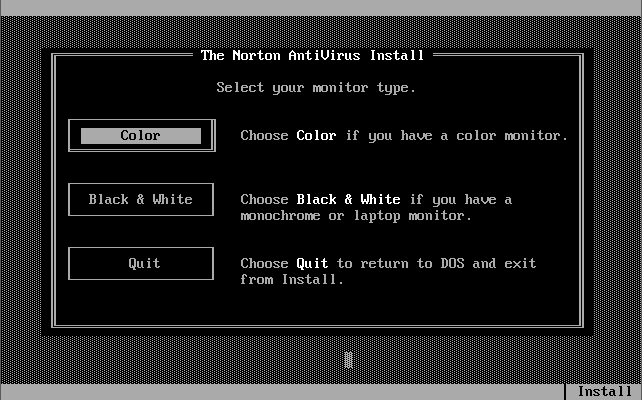
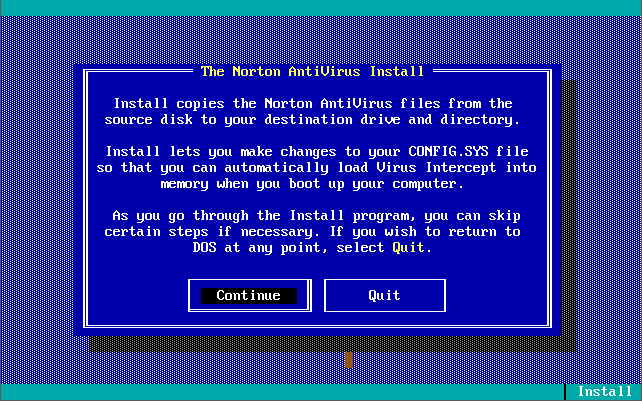
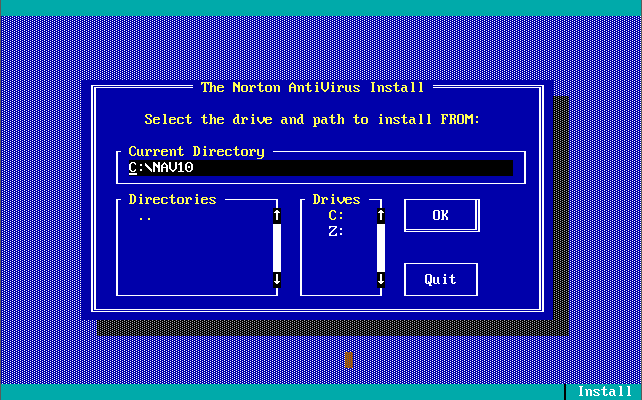
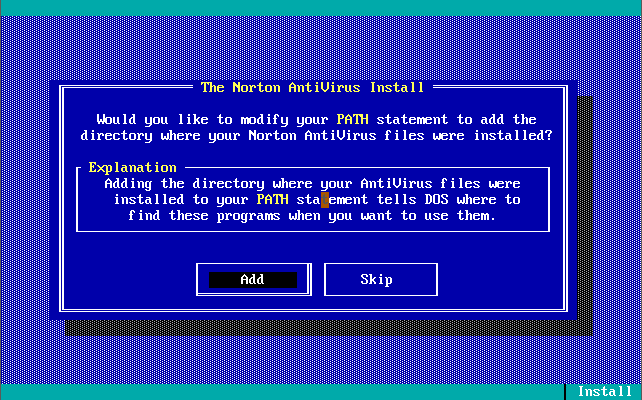
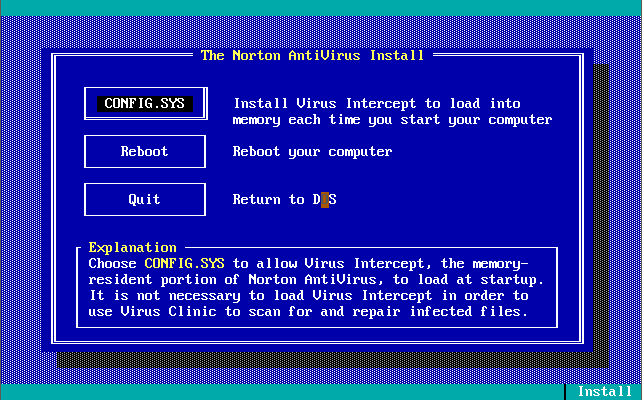
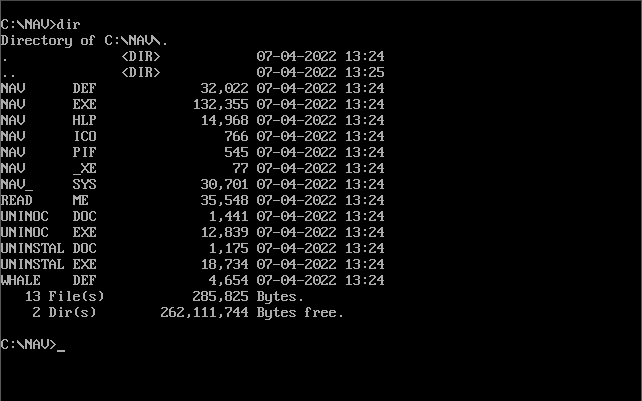
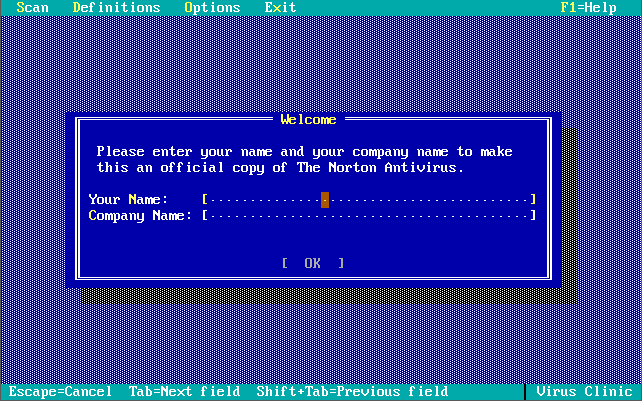
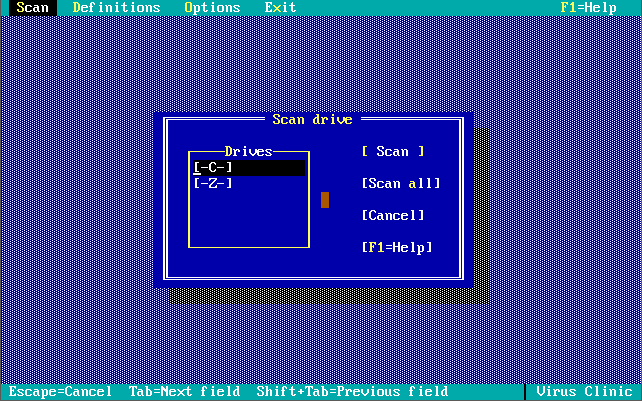
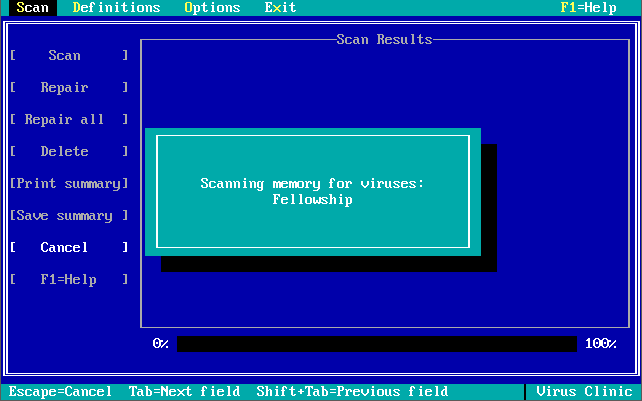
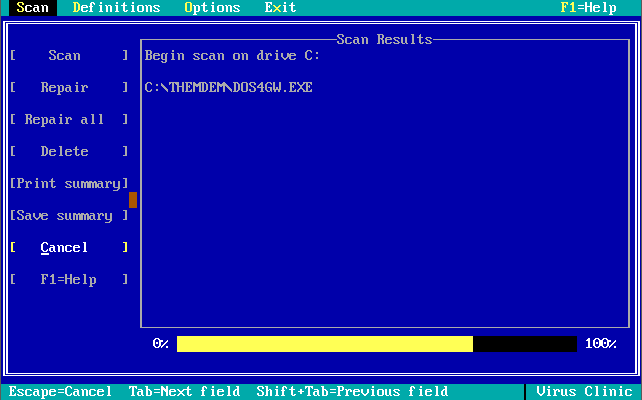
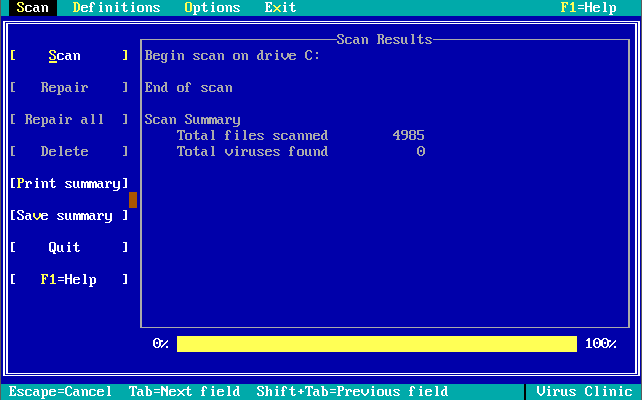
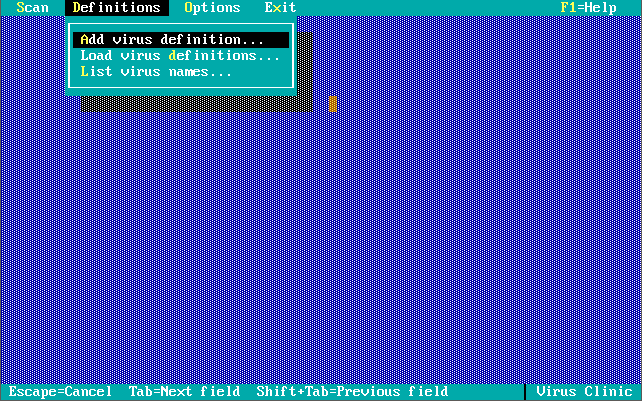
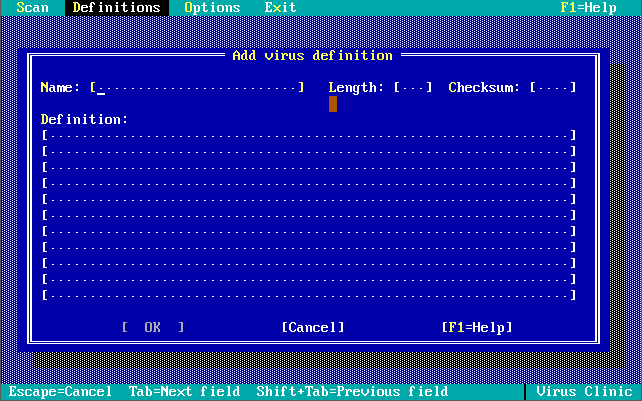
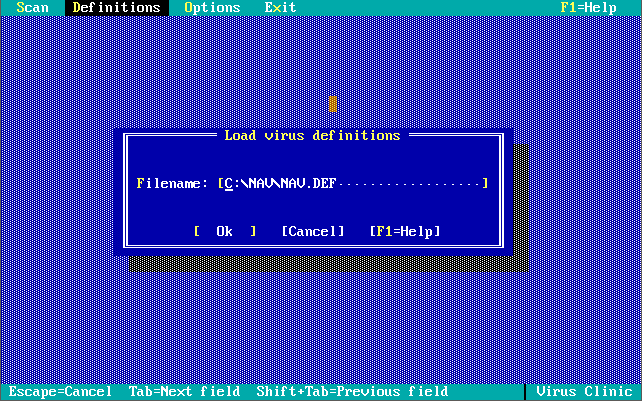
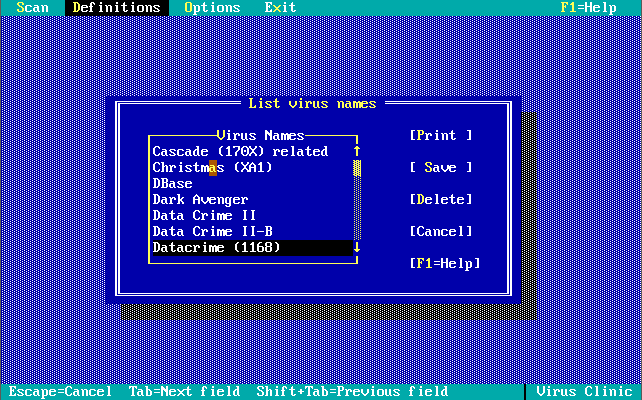
Note in these last 3 screenshots the somewhat unique ability to input your own virus definitions, or signatures directly!
Version 1.5 arrived on 5th August 1991, 8 months after the first release. It was much the same as v1.0.0 to install, except for the added option of the level of scanning on startup that Virus Intercept would perform. It could detect and remove 321 viruses. No other features differed from v1.0.0.
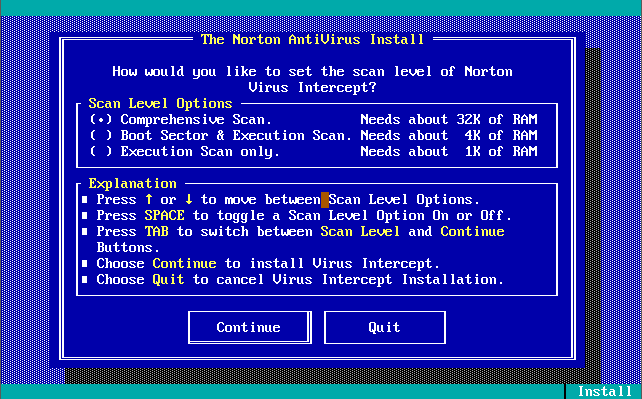
Virus Intercept v1.5's startup settings
Version 2.0 was released in 1992, supporting both DOS and Windows. It's virus definition file (dated 7th April 1992 and weighing in at 31 KB) detected 340 known viruses and 1,005 strains. This version added the concept of creating a 'Rescue Disk' that you could use to boot virus-free and run a scan. You could still add your own virus definition manually via the Definitions->Modify List menu option.
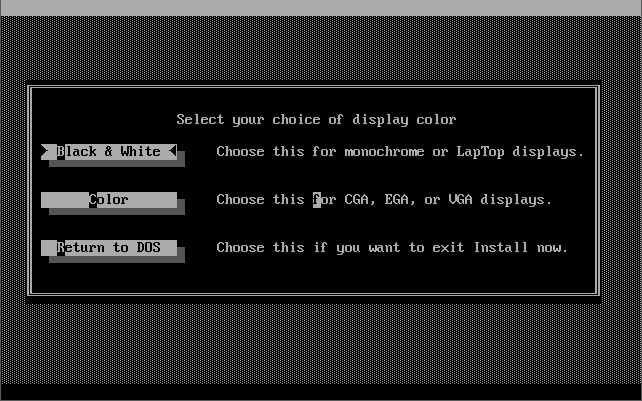
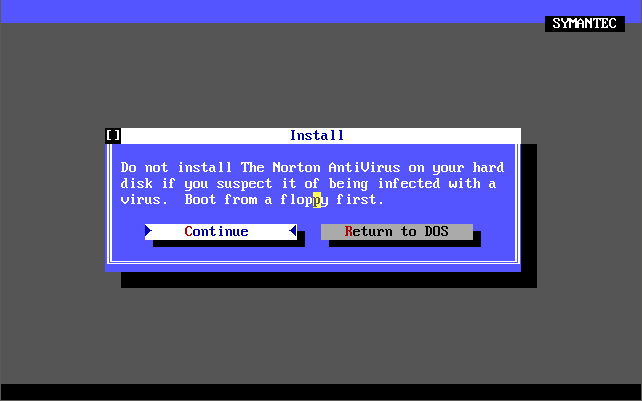
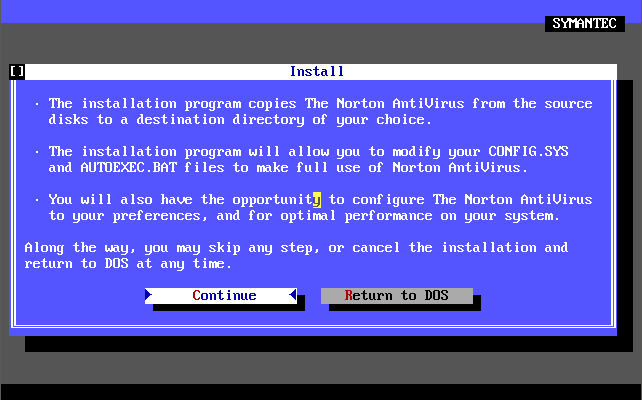
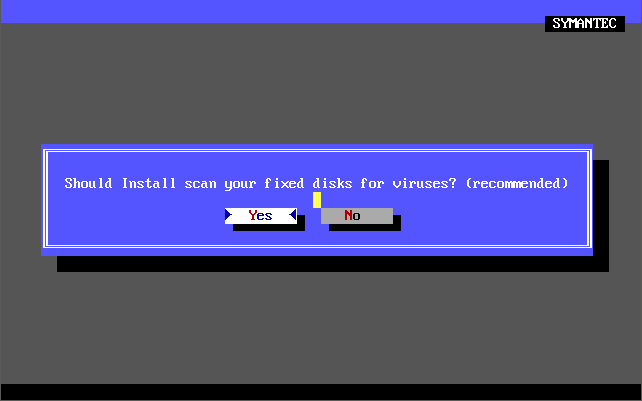
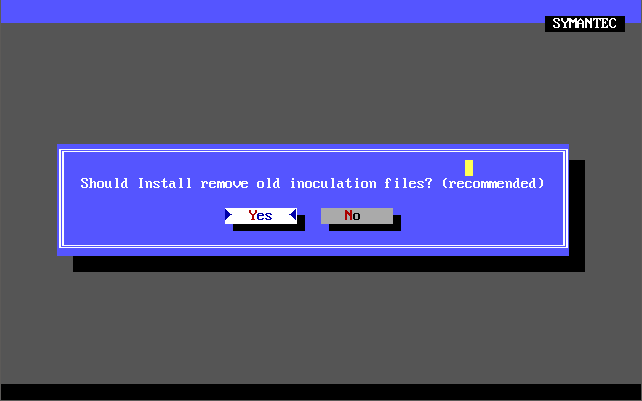
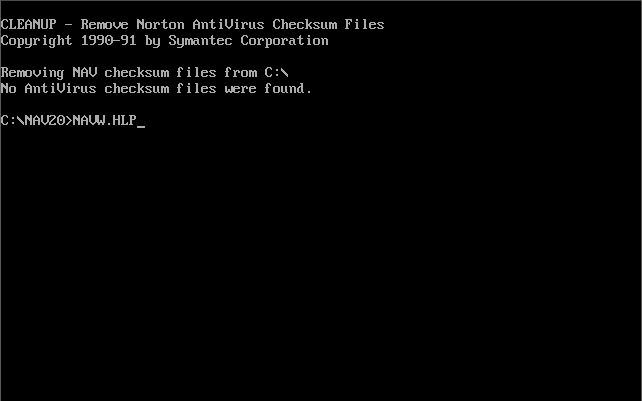
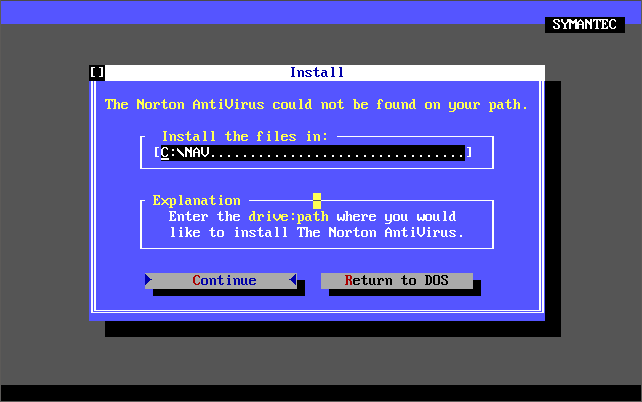
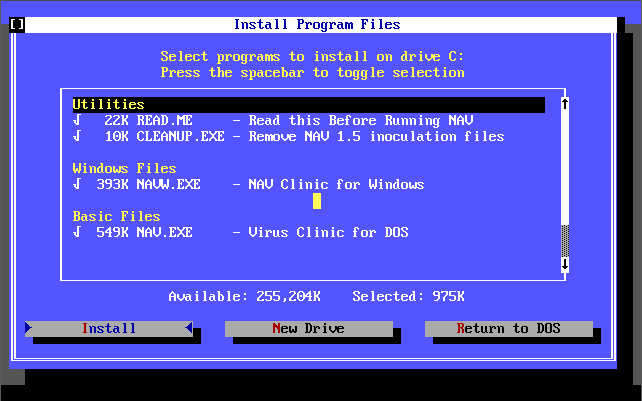
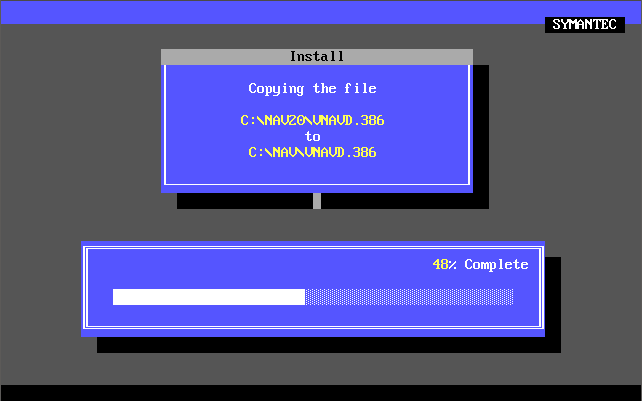
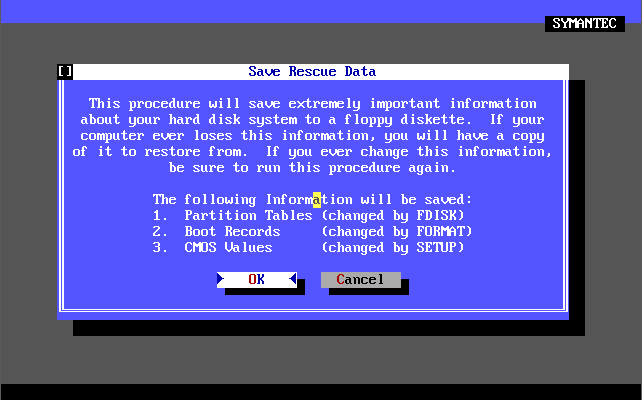
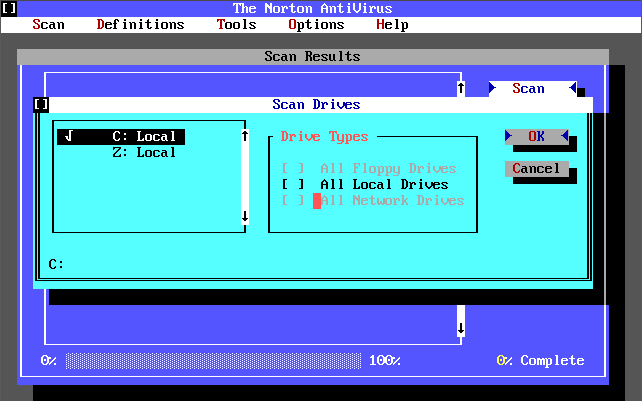
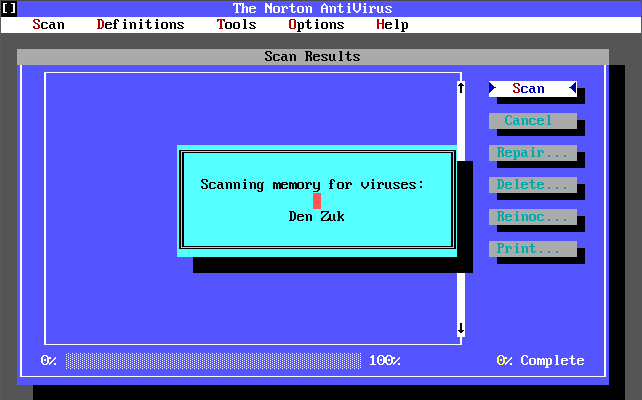
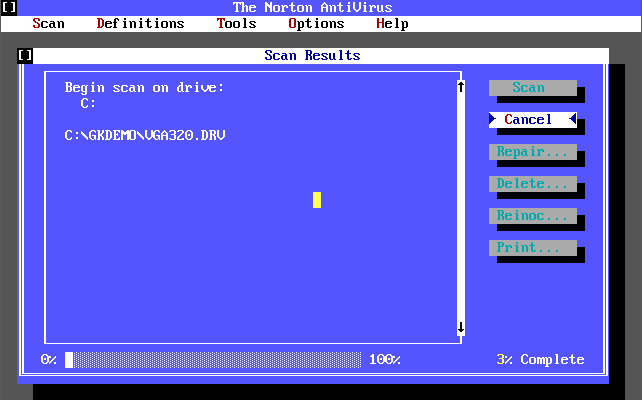
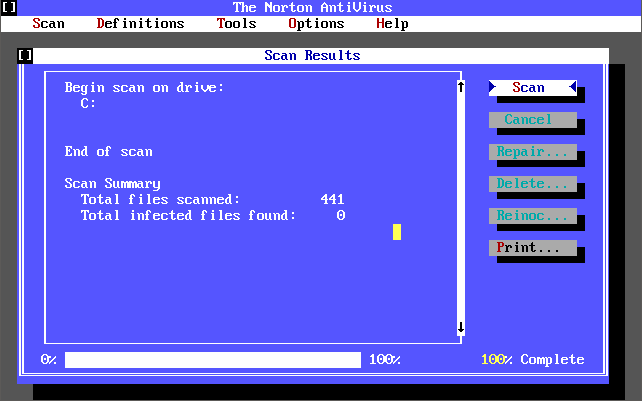
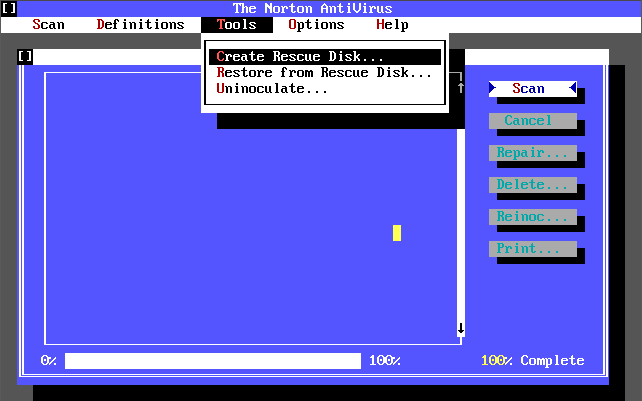
There was also a 'Michelangelo Edition' which was a free cut-down version of Norton AntiVirus 2.0 for DOS that came out on 15th February 1992 in time for when the Michelangelo virus was due to activate on 6th March 1992. Upon activation the virus would begin formatting the infected computer's hard disk. Symantec released this version which detects and removes the Michelangelo virus.
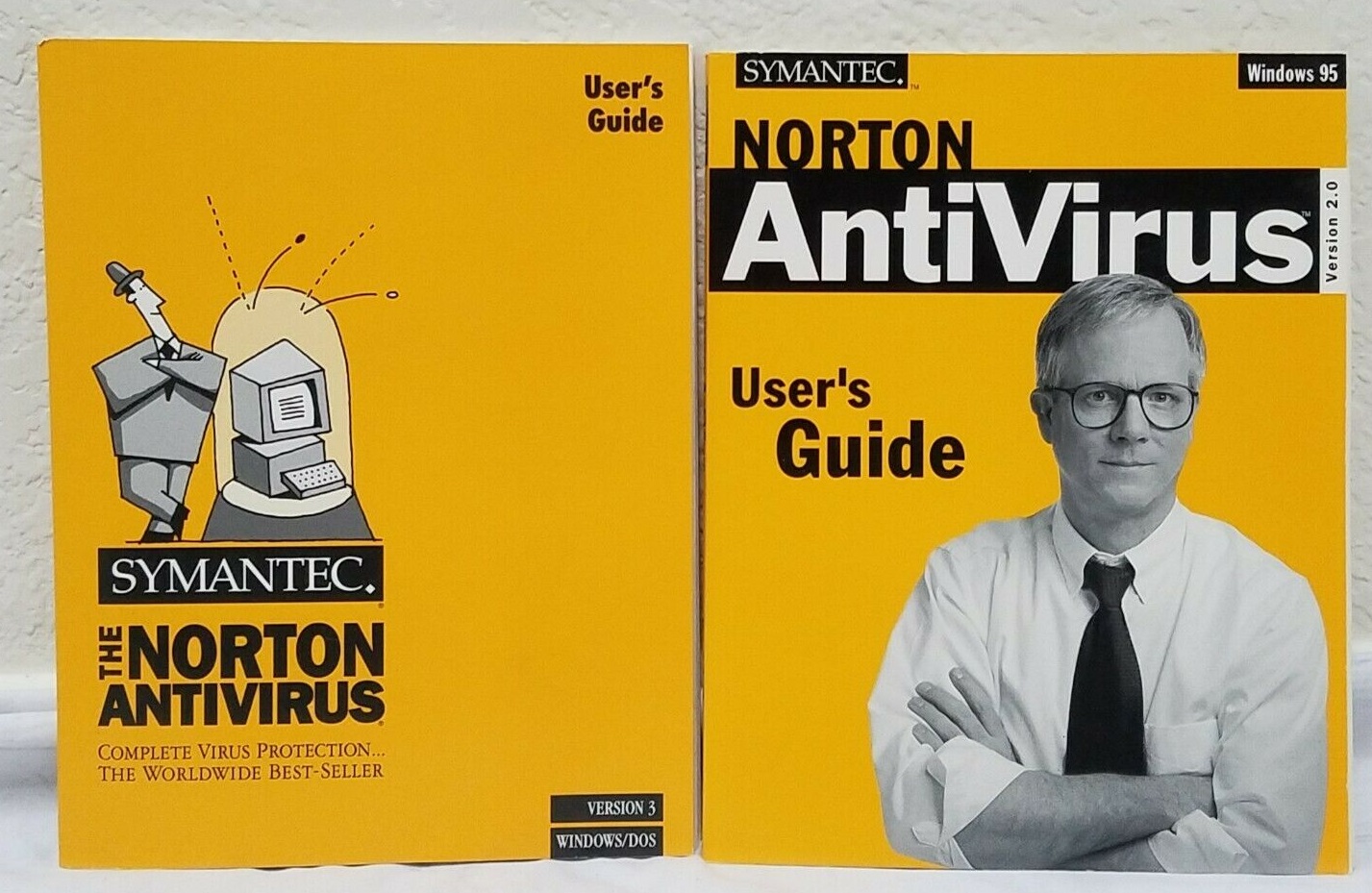
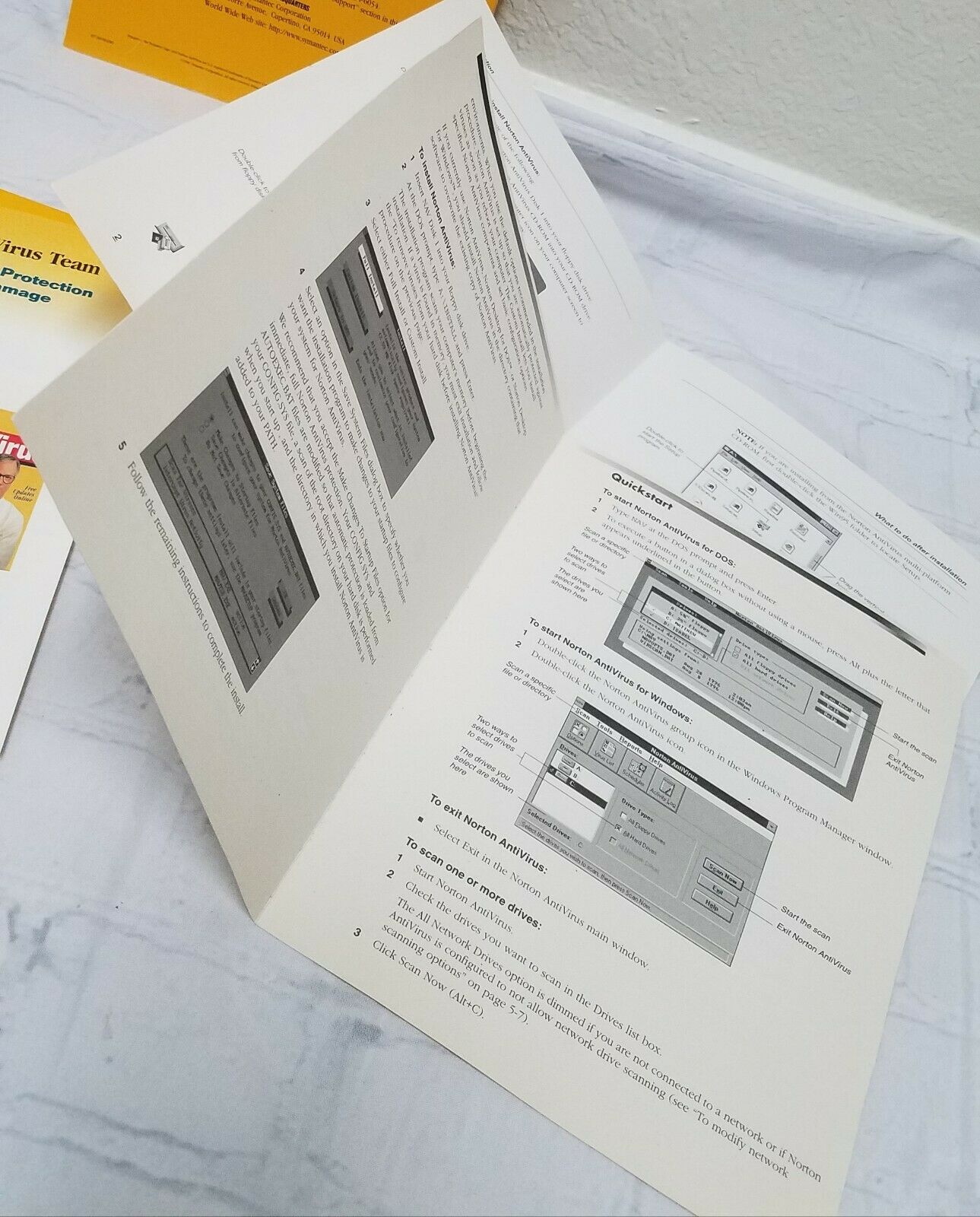
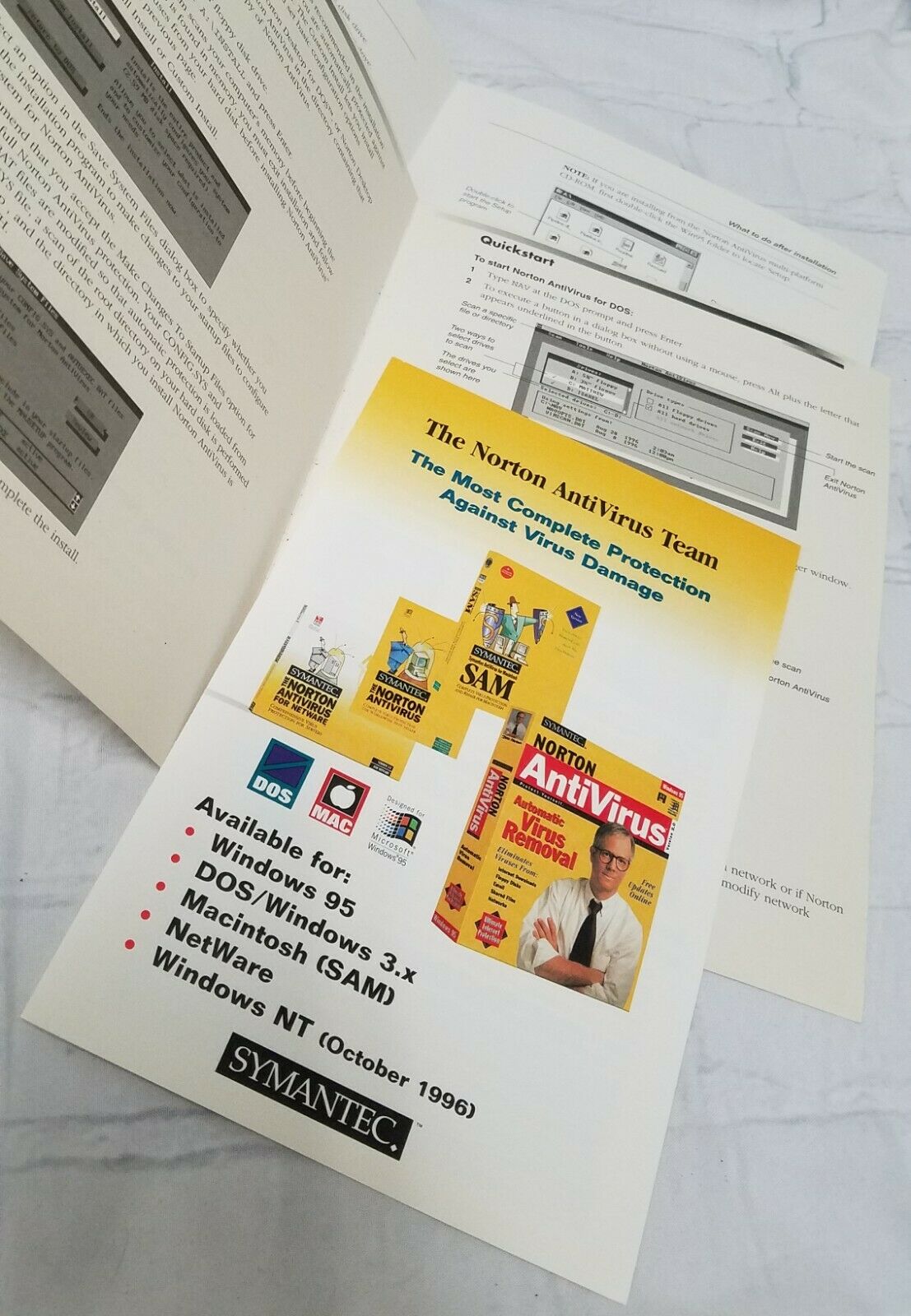
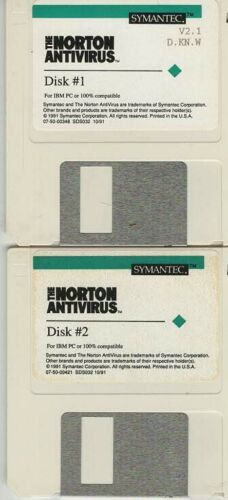
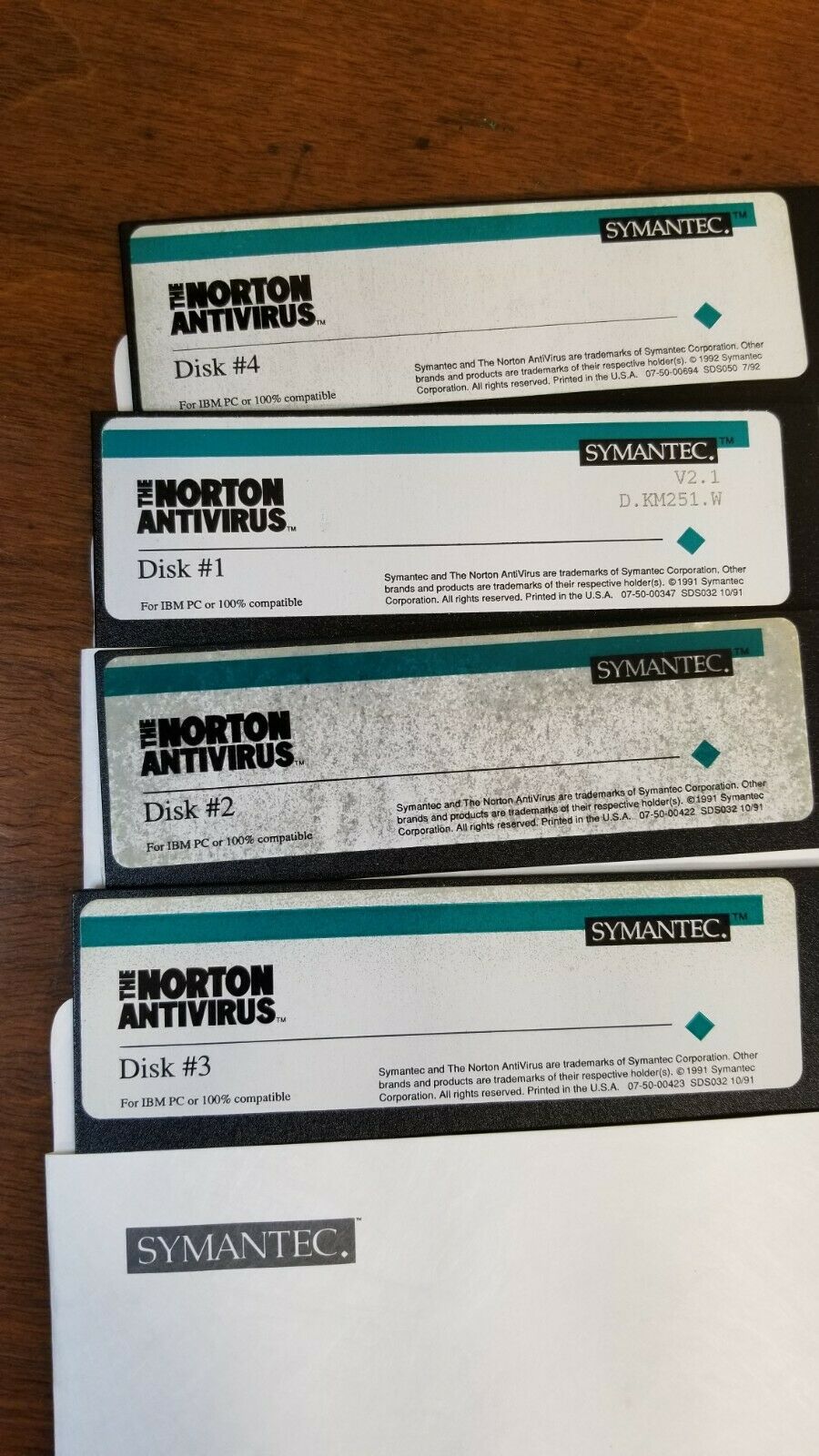
Version 2.1:
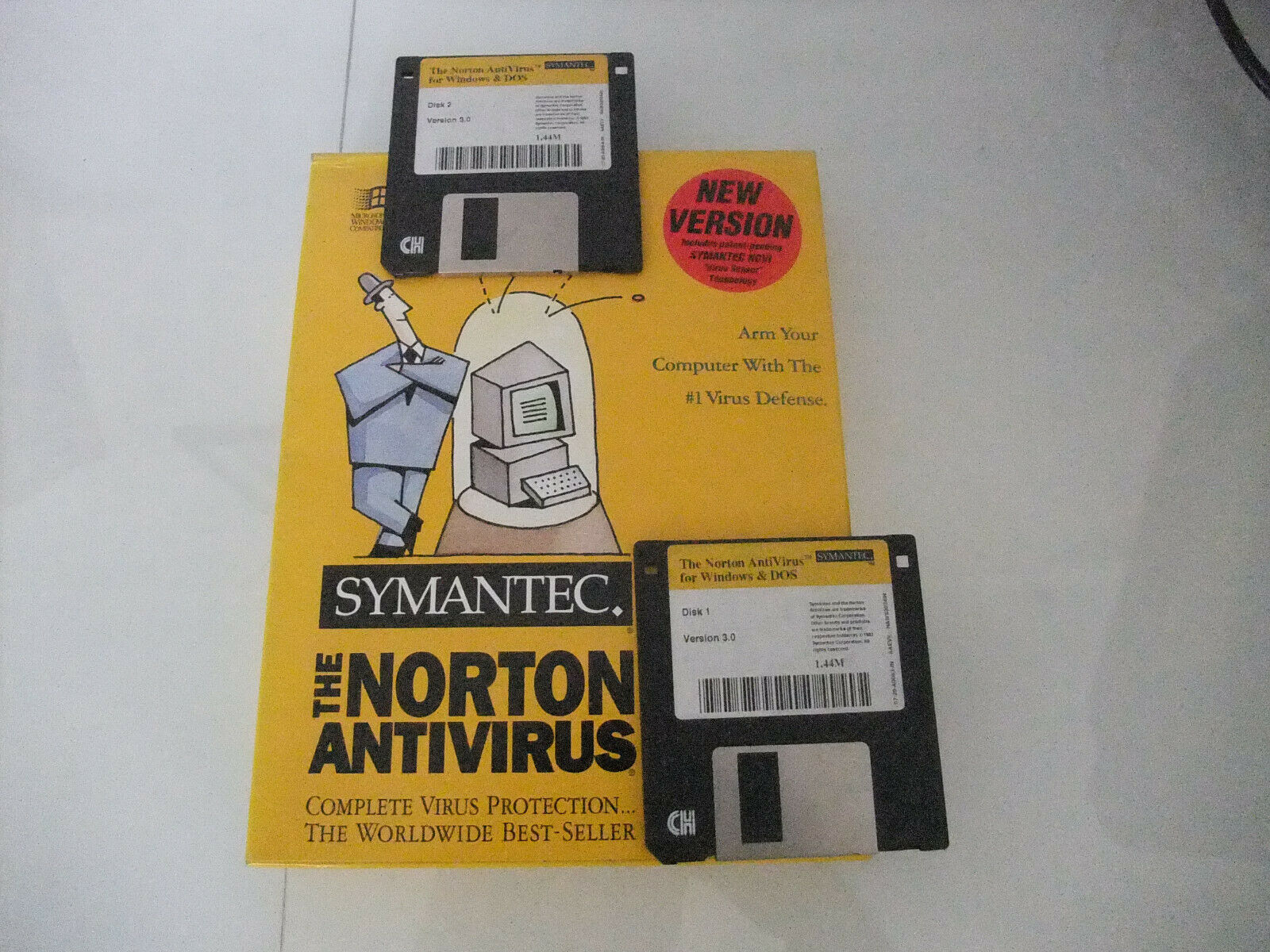
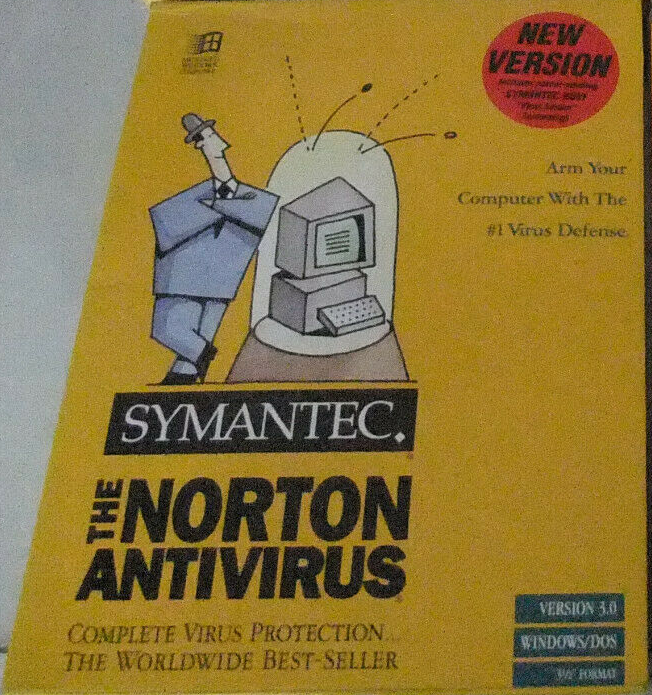
Version 3.0:
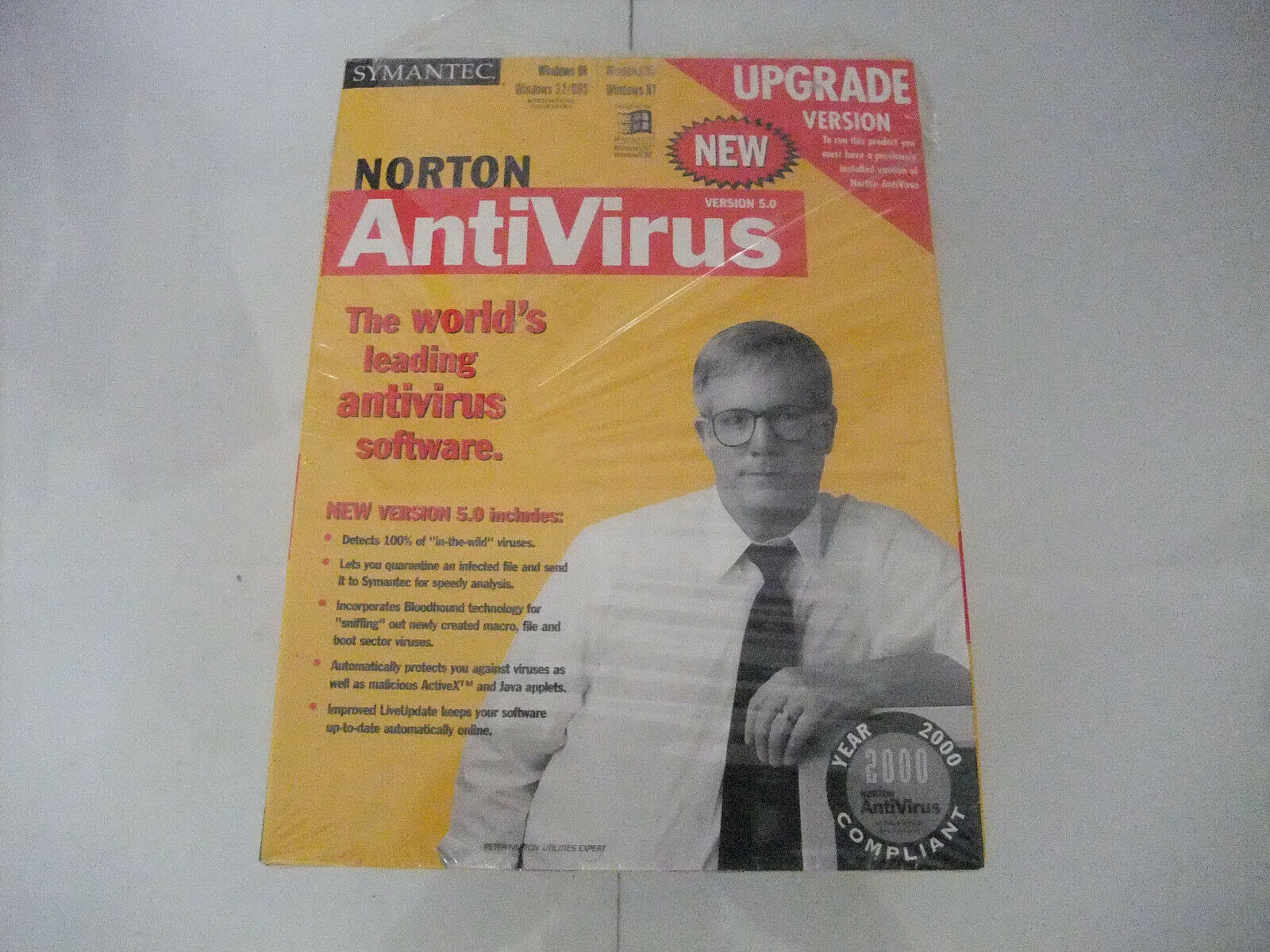
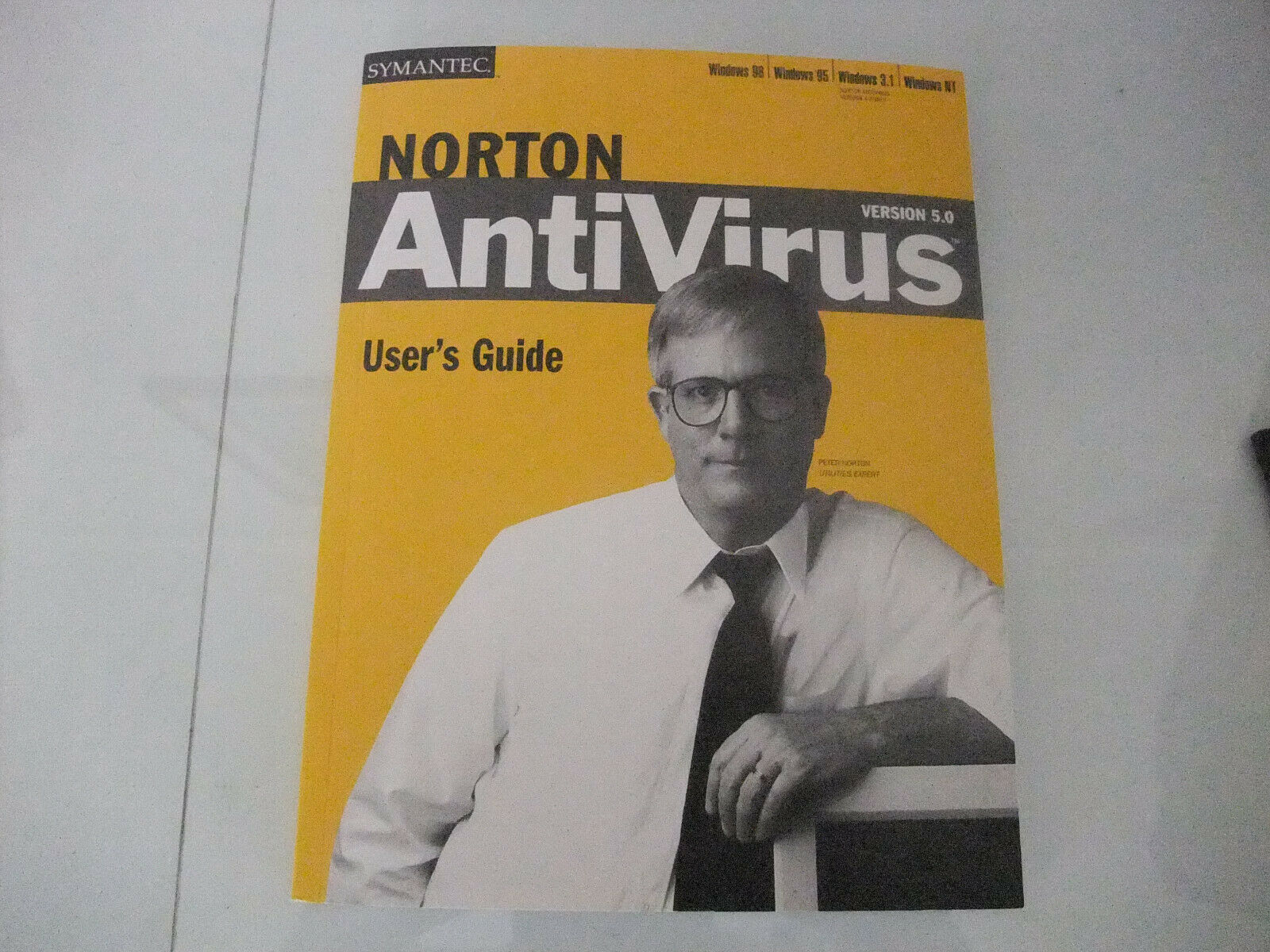
Version 5.0:
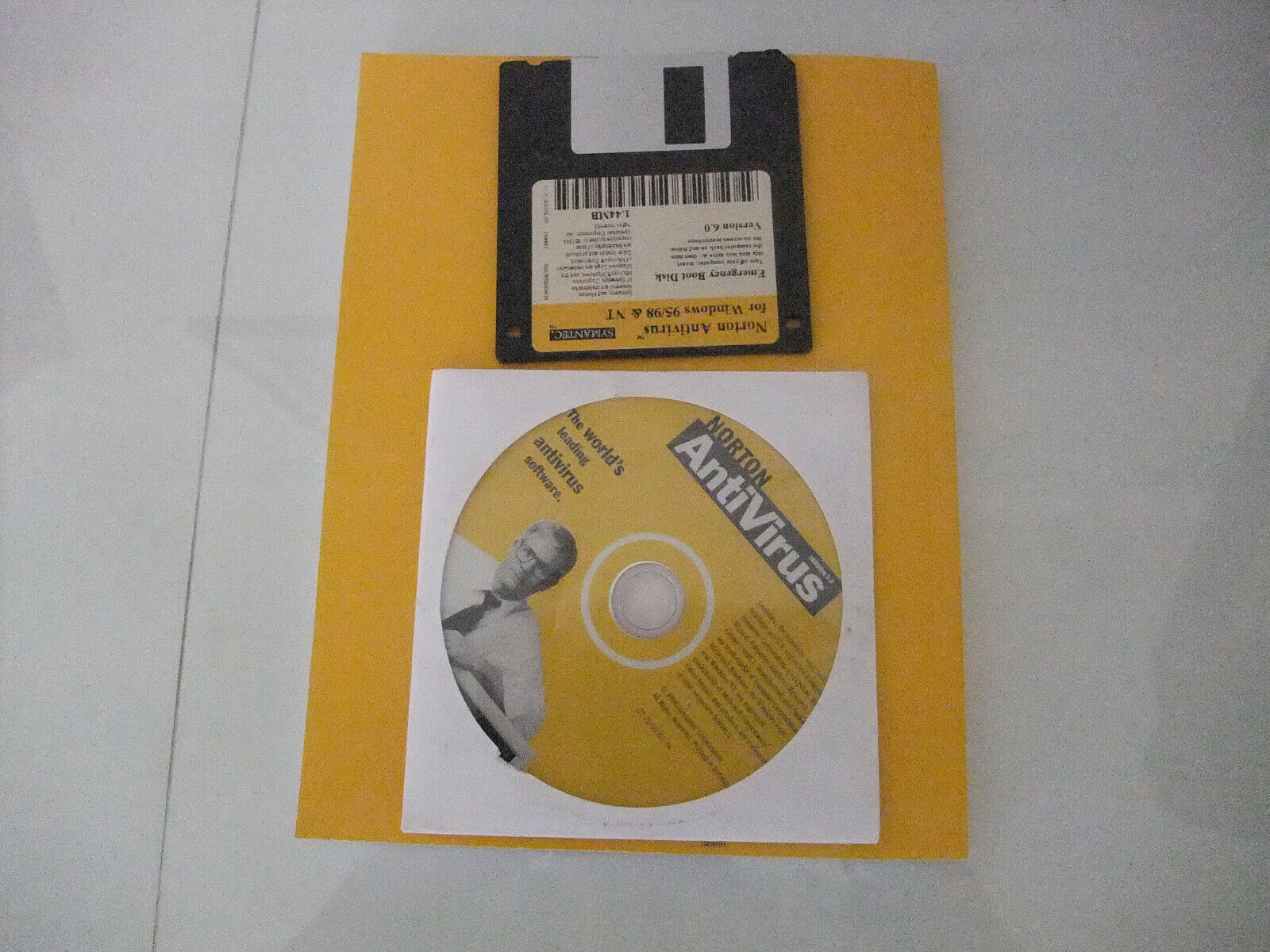
The last virus definition updates for DOS were around September 2001, which was 0907i16.exe.
Norton Commander
The Norton Commander was a file manager, editor, viewer and terminal emulator, first launched in 1986. It was designed to make those difficult or impossible tasks in the DOS command line possible and easy to do. With two 'panels' you could view two directories side-by-side and perform operations between them.
Version 4.0 arrived in July 1993, adding these new features:
- over 30 new file viewers including Lotus 1-2-3, RBase, dBase, Reflex, Paradox, Q&A, compressed files (.ZIP, .ZOO, .ARJ, .ARC, .LZH, .ARC and .PAK) and images (both bitmap and vector)
- compressed file handling
- new editor features
- a new cloning feature
- advanced features for Power Users
- new shortcut keys
- filter/attribute improvements
Version 5.0 was released in February 1995, and added the following new features:
- drag & drop capability to copy or move files between the left and right panels
- more advanced filters for selecting files based on date/time, size, and attributes
- a sync feature to keep directories the same between two or more computers or network volumes
- compressed file viewing
- more disk utilities including format disk, label disk and copy disk
- network utilities (for Novell Netware 3.x and 4.x) including attach/detach network, map drive, send message, and server info
- file split/merge
- disk cleanup
- file search - a completely rewritten File Finder with regular expression support, duplicate file search, multiple search locations and much more
- modified terminal emulation program
- 20 screen savers (both text and graphics)
Version 5.51 was the last release for DOS, arriving on 1st July 1998. It was almost the same as version 5.0 in terms of functionality, but added support for long filenames (LFNs), though in DOS real mode this did require a TSR to be loaded first, otherwise filenames would be truncated.
Norton Desktop
The Norton Desktop for Windows was launched in 1991, combining the features of Symantec's three most popular DOS utility programs: The Norton Utilities, The Norton Commander, and The Norton Backup. At $149, it was designed to be an enhanced replacement to the standard Windows File Manager and Program Manager.
Most of the components of the product have been enhanced, and there are several new modules including an editor, virus protection, a macro recorder, and a financial calculator.
The central element of the collection is the Norton Desktop itself, a combined file-launcher, and manipulator. Symantec has addressed the most frequent complaint about this module: slow loading times. While our tests didn't match the 'up to six times faster' claims of Symantec, the effect was still dramatic. On our 25-MHz 386 test system, Norton Desktop 1.0 took 20 seconds to load under Windows 3.0 and 15 seconds under Windows 3.1. Loading Version 2.0 running under Windows 3.1 took only 7 seconds. The time Windows takes to load is not included in these results.
Norton's Quick Access, part of the Desktop, had the look of Program Manager in Version 1.0 but included enhancements such as subfolders. Version 2.0 lets you choose one of three looks: the Program Manager look, a scrolling text list, or an icon-only toolbox.
Also new to the basic desktop are drag-and-drop capabilities, and not just for the few Norton-specific programs supported in Version 1.0.
There are also several improvements to the file manipulator. The side-by-side directory tree and file lists are still there, but now you can easily get the total size of all the files in a directory - a capability that was lacking in Version 1.0.
A popular feature of the file view is the button bar, which lets you call up file actions from text buttons. Version 1.0 allowed only six buttons. Version 2.0 can have up to 14 (depending on your display type).
Improved File Viewing
The file viewers have also been improved. Support has been added for almost 20 new file types including .DRW, 24-bit TIFF, and Lotus 1-2-3, Release 3.0, files. Most graphics, word processor, database, and spreadsheet file types are included (two exceptions are .PIF and Targa). The ZIP viewer shows only the zip directory, not the files within. Lotus's Magellan, a DOS product, as been doing this for years, but no Windows program has this feature.
The file viewers worked well, with two exceptions. Some Microsoft Word for Windows 2.0 files we tried to view generated error messages, and the .PCX viewer failed on 24-bit color .PCXs and a few 8-bit .PCX files.
Sleeper, the included screen saver, has been improved. It will use the screen savers that come with Windows 3.1 as well as those that ship with Intermission and with AfterDark 1.0.
Batch Runner, the batch language that Symantec licenses from Wilson Windoware, has several enhancements in this version. Network-specific commands have been added, the batch editor has been improved, and, most significantly, there is now a Macro Builder to record batch files. But there is still no dialog editor.
Missing from the initial shipment of Version 2.0 is support for tape drives in the included Norton Backup for Windows. This is promised, and a coupon is provided to get the tape backup module for a nominal shipping charge when it becomes available.
New Editor
Of the new modules, the best is Desktop Editor, a vast improvement over Notepad. It will edit multiple files using the Windows MDI, has a powerful search feature including pattern matching, and offers multilevel undo. It also includes a great file-comparison feature.
A financial calculator to supplement the tape and scientific calculators is also new. Using reverse Polish notation, it will do cash flow analysis and statistics on entered data. In addition, there are fill-in-the-blank forms for simple interest, mortgage amortization, bond yield, and date/time arithmetic.
Also new with this version is virus protection that includes everything in the standalone Norton Anti-Virus program: a DOS device driver and both Windows- and DOS-based scanners.
There is an uninstall module, something we wish other Windows programs provided. And the incompatibility with Turbo Pascal for Windows programs has been resolved.
Any regular user of Norton Desktop for Windows will want to upgrade, for the faster loading and the useful editor if nothing else. What was already a good alternative to the basic Windows interface has become even more attractive."
PC Magazine, 16 June 1992

An advert for Norton Desktop 1.0 for Windows (1991)
In 1992, Version 2.0 was released at the same price as Version 1.0: $149, or $49 for the upgrade version. Also released the same year was Norton Desktop for DOS Version 1.0.
In 1993, Norton Desktop 3.0 for Windows was released.
The Norton Editor
Brand new for 1986 was The Norton Editor - a programmer's editor that sold for $50. Claimed to be lightning fast and with all the features programmers need.